
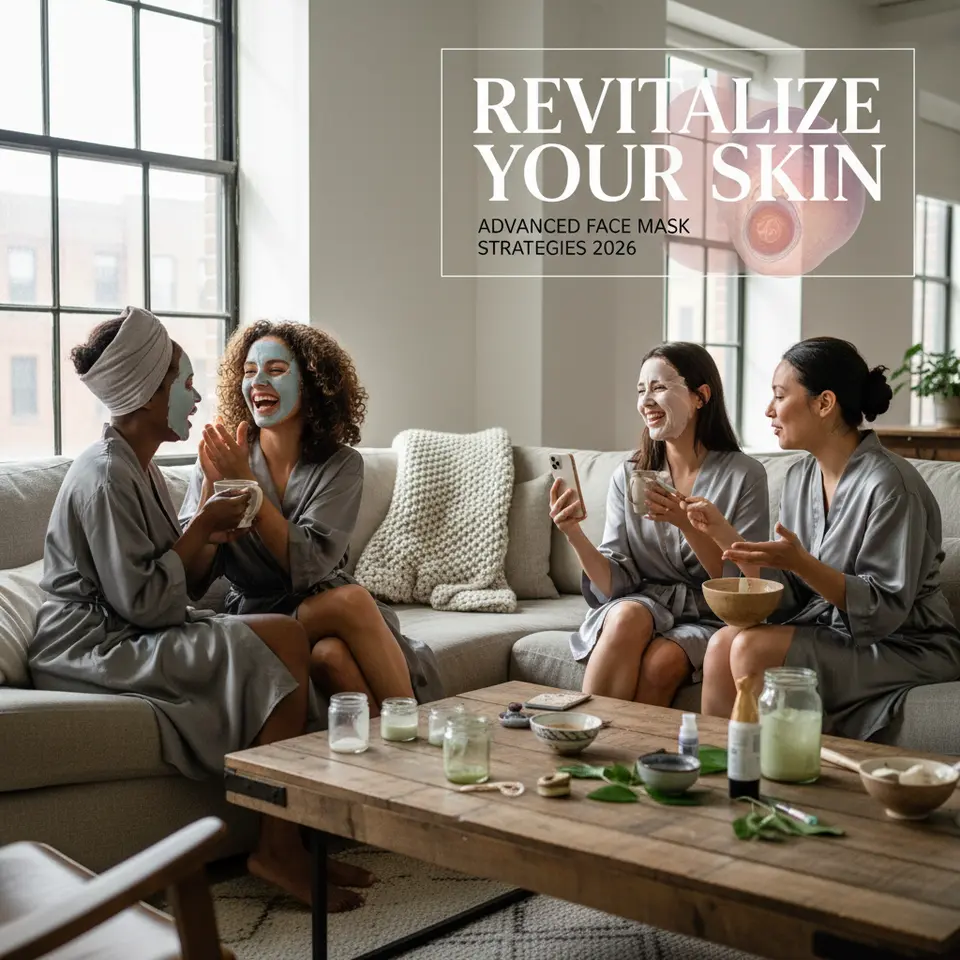
Revitalizing skin health has become a top priority for beauty enthusiasts today, and advanced face mask strategies are leading the way in delivering targeted, professional-grade results at home. In today’s digital landscape, consumers demand potent yet gentle treatments that address multiple concerns—from fine lines and dehydration to congestion and dullness—in a single application. This year (2026), innovations in ingredient science and delivery technology are transforming how masks perform, enabling deeper penetration, time-released benefits, and personalized routines that fit every skin type. In this comprehensive guide, we explore the latest breakthroughs in bioactive compounds, cutting-edge mask formats, expert application methods, and tailor-made regimens that ensure you extract maximum value from every jar or sheet. Whether you’re a committed skincare devotee or someone seeking to elevate a basic self-care ritual, the following insights will empower you with evidence-based knowledge and practical tips. We’ll reference authoritative resources such as the National Center for Biotechnology Information (NCBI) and the U.S. National Institutes of Health (NIH) to ground our advice in rigorous research. By embracing these advanced face mask strategies, you’ll cultivate a radiant, healthy complexion that thrives in every season—today and beyond.
Understanding Next-Generation Ingredients in Face Masks
Cutting-edge formulations this year (2026) harness a combination of bioactive molecules and innovative delivery systems designed to optimize skin benefits while minimizing irritation. Peptides—short chains of amino acids—have become a cornerstone of advanced face mask strategies due to their proven ability to stimulate collagen synthesis and promote skin firmness. According to a study on NCBI, certain synthetic peptides can increase dermal elasticity by up to 25% when used consistently.1
Retinol derivatives are also evolving; encapsulated retinol particles release slowly over time, decreasing redness and sensitivity while boosting cellular turnover beneath the surface. Natural alternatives such as bakuchiol offer gentler retinol-like effects, brightening skin tone without the common drawbacks of irritation. Stabilized vitamin C derivatives—like magnesium ascorbyl phosphate—provide antioxidant defense against environmental aggressors, preserving collagen integrity and preventing premature aging. Hyaluronic acid’s multi-weight molecules penetrate both surface and deeper skin layers for sustained hydration, and encapsulated alpha-hydroxy acids (glycolic, mandelic, and lactic) ensure controlled exfoliation that refines texture without excessive dryness.
To further enhance performance, many mask formulas integrate liposomal or nanotechnology-based carriers. These microscopic vesicles protect active ingredients from degradation and facilitate deeper absorption, allowing each component to reach its target more effectively. Such innovations exemplify the commitment to advanced face mask strategies in 2026, offering transformative outcomes backed by scientific validation and consumer-centric design.
Innovative Mask Formats to Elevate Your Routine
![[object Object]](https://maskorbis.com/wp-content/uploads/2026/05/revitalize-your-skin-advanced-face-mask-strategies-image-1.webp)
Gone are the days when face masks were limited to single-use clay or sheet varieties. Today’s market boasts a spectrum of textures and delivery methods that cater to individual preferences and specific concerns within advanced face mask strategies. Hydrogel masks, for example, are jelly-like sheets infused with concentrated serums. Their cooling effect soothes irritation and visibly plumps the skin in real time, making them ideal for post-procedure recovery or a quick brightening boost.
Rubber and alginate masks, typically offered as two-part powders, transform into a thick, peel-off layer when mixed with water or activator solutions. This solid film locks in actives and increases contact time, optimizing ingredient penetration and leaving skin smoother upon removal. Foaming bubble masks harness oxygen infusion—a playful approach that gently exfoliates dead cells, enhances blood circulation, and imparts a radiant glow. Cream and gel masks remain classics, often enriched with ceramides, niacinamide, peptides, and antioxidants to fortify the skin barrier and retain moisture.
Thermo-activated masks represent another frontier: these formulations generate mild heat upon contact, opening pores for deeper cleansing and heightened absorption of key nutrients. The sensation of warmth encourages relaxation while facilitating a more thorough detox. Whether you gravitate toward rinse-off puddings, leave-on sleeping varieties, or quick-absorb ampoules, integrating diverse mask types into your regimen ensures that you address multiple concerns effectively—true to the ethos of advanced face mask strategies in 2026.
Mastering Tools and Application Techniques
To fully capitalize on advanced face mask strategies, pairing your chosen formula with the right application tools and protocols is essential. Silicone spatulas and applicators offer an ultra-hygienic way to spread products evenly, minimizing waste and preventing contamination. Synthetic fan brushes provide precise delivery, especially useful for viscous or lightweight masks, while facial cleansing brushes or rotating devices gently buff the skin surface beforehand, clearing away debris and prepping pores for absorption.
Incorporating a short steam session—3 to 5 minutes—prior to masking can significantly enhance efficacy. A facial steamer raises the skin’s temperature, causing pores to expand and allowing active ingredients to penetrate deeply. For those without a steamer, a warm, damp towel applied for 2 minutes offers a similar benefit. After mask application, employ gentle upward strokes with your fingertips or a jade roller to promote circulation and ensure uniform distribution of actives.
Advanced techniques such as the occlusion method—layering a thin gel mask over a serum or ampoule—help lock in potent ingredients, creating a semi-occlusive environment that boosts absorption. Double masking, or multi-masking, enables you to apply distinct formulas to different zones: clay or charcoal masks on oily areas, hydrating gels on drier patches. Following recommended wear times is crucial; leaving masks on past the advised duration may lead to dehydration or sensitivity, undermining the benefits of advanced face mask strategies.
Personalizing Your Face Mask Regimen
![[object Object]](https://maskorbis.com/wp-content/uploads/2026/05/revitalize-your-skin-advanced-face-mask-strategies-image-2.webp)
Customization lies at the heart of effective advanced face mask strategies. Identifying your primary skin concerns—whether excess oil, dryness, aging, or sensitivity—guides your selection of ingredients, formats, and application frequency. For oily and acne-prone complexions, clay or charcoal masks infused with salicylic acid or bentonite clay draw out excess sebum and purge trapped impurities. Incorporating a weekly salicylic peel can further refine pores, but avoid using multiple harsh exfoliants simultaneously.
Dry or dehydrated skin types flourish with hydrogel, cream, or sleeping masks formulated with hyaluronic acid, glycerin, natural oils, and ceramides. Seek formulas containing fatty acids like linoleic acid or squalane to reinforce the lipid barrier. Mature or aging skin benefits from peptide-rich or collagen-boosting masks; look for hydrolyzed collagen, Matrixyl™, or copper peptides to enhance elasticity and reduce fine lines. Masking twice a week—with at least 48 hours between sessions—can maximize results without overloading the skin.
Sensitive or redness-prone skin demands gentle, fragrance-free options. Centella asiatica (cica), aloe vera, and oat extracts deliver calming, anti-inflammatory effects. Conduct a patch test on your jawline before full-face application to ensure compatibility. Combination skin is perfectly suited for multi-masking: apply balancing clay masks on the T-zone, hydrating gels on the cheeks, and soothing cream masks around the mouth and eyes for a truly bespoke treatment routine.
DIY Recipes and Pro-Level Tips for Maximum Impact
For skincare enthusiasts keen on crafting their own formulations, advanced face mask strategies extend to elevated DIY recipes that blend potent actives with natural ingredients. Try a charcoal and niacinamide detox mask by mixing one tablespoon of activated charcoal powder, half a teaspoon of niacinamide powder, and enough aloe vera gel to form a smooth paste. Leave on for 10 to 12 minutes before rinsing to achieve clarity and balanced oil control.
To soothe irritation and support the skin’s microbiome, combine one tablespoon of raw honey, one teaspoon of plain Greek yogurt, and half a teaspoon of probiotic powder or crushed encapsulated probiotic beads. Apply for 15 to 20 minutes, then rinse to reveal a calmer, strengthened barrier. For a firming collagen-peptide gel mask, dissolve one teaspoon of marine collagen powder in warm rose water, then blend with two tablespoons of hyaluronic acid serum. Relax under a towel for 20 minutes to allow peptides and hydration to infuse deeply.
Pro-level application tips reinforce these advanced face mask strategies: always start with a clean, toner-prepped complexion; adhere to recommended wear times; and avoid over-exfoliation by spacing potent chemical treatments at least 48 hours apart. After rinsing, gently massage any remaining serum into the skin using upward strokes, then seal hydration with a broad-spectrum SPF if masking in the morning. Store homemade concoctions in airtight containers in the refrigerator for up to one week, discarding at the first sign of discoloration or odor.
FAQ
- What makes peptides effective in face masks? Peptides are short chains of amino acids that stimulate collagen synthesis, improving skin firmness and elasticity.
- How often should I use a face mask? Most face masks can be used 1–2 times per week. Adjust frequency based on your skin type and mask formulation.
- Can I combine multiple masks in one session? Yes. Using the multi-masking technique, apply specific masks to areas based on your skin’s needs (e.g., clay on T-zone, hydrating gel on cheeks).
- Are DIY masks as effective as commercial products? Well-formulated DIY masks with scientifically backed ingredients can be highly effective, but commercial masks often use advanced delivery systems for deeper penetration.
Conclusion
Implementing advanced face mask strategies in your skincare arsenal empowers you to achieve clinically inspired results from the comfort of your home. By understanding the science behind next-gen ingredients, experimenting with innovative mask formats, mastering precise application techniques, and personalizing your regimen, you unlock the full potential of each treatment session. Whether you rely on professional formulations or create your own DIY blends, consistency and adherence to best practices ensure long-lasting radiance and resilience in today’s dynamic environment. Embrace these insights to revitalize and transform your complexion—today and throughout the rest of 2026—cultivating healthier, more luminous skin that stands up to every challenge.
