


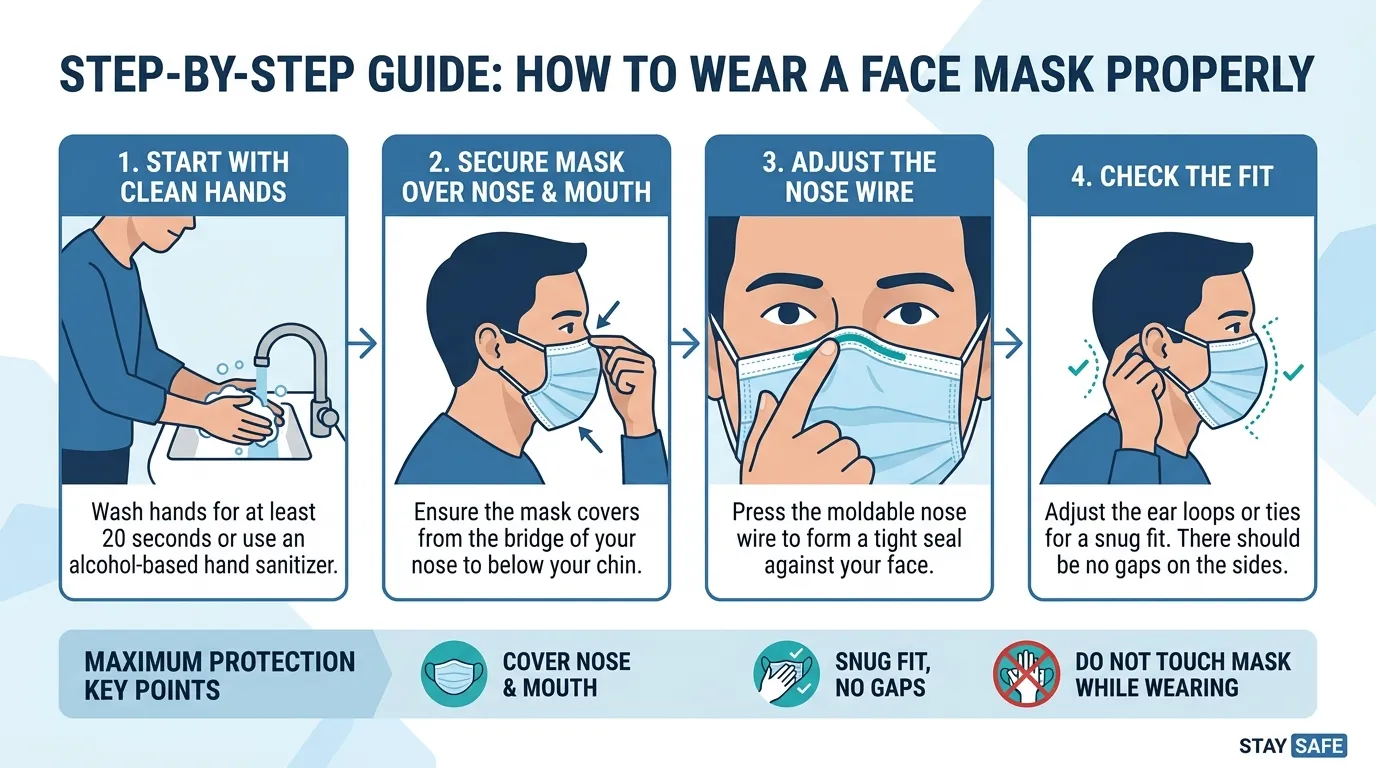
Wearing a face mask correctly involves proper hand hygiene, a secure fit over the nose, mouth, and chin, and careful handling to avoid contamination. The effectiveness of any mask depends on how well it fits, how it is worn, and how safely it is removed. Following correct usage techniques helps reduce the spread of respiratory droplets and improves personal protection in public spaces.
To wear a face mask properly, wash your hands with soap and water before handling the material. Hold the mask by the ear loops or ties, and secure it firmly over your nose, mouth, and chin. Ensure a snug fit without gaps on the sides, and avoid touching the front of the mask while wearing it to prevent cross-contamination.
Masks serve as a critical barrier against respiratory droplets and airborne particles. Covering your nose and mouth significantly reduces the transmission of viruses and bacteria. However, simply placing a piece of fabric over your face does not guarantee safety. The effectiveness of any facial covering relies entirely on proper fit, handling, and disposal.
Many people unknowingly compromise their protection by wearing masks loosely, touching the contaminated surfaces, or pulling the material down to speak. Understanding the specific protocols for different types of protective gear ensures you get the highest level of filtration possible. This comprehensive guide outlines the exact procedures for wearing, adjusting, and safely removing surgical masks, N95 respirators, and everyday face coverings. You will learn how to achieve a secure seal, maintain proper hygiene, and navigate public spaces with confidence.
What are the proper mask wearing guidelines for everyday use?
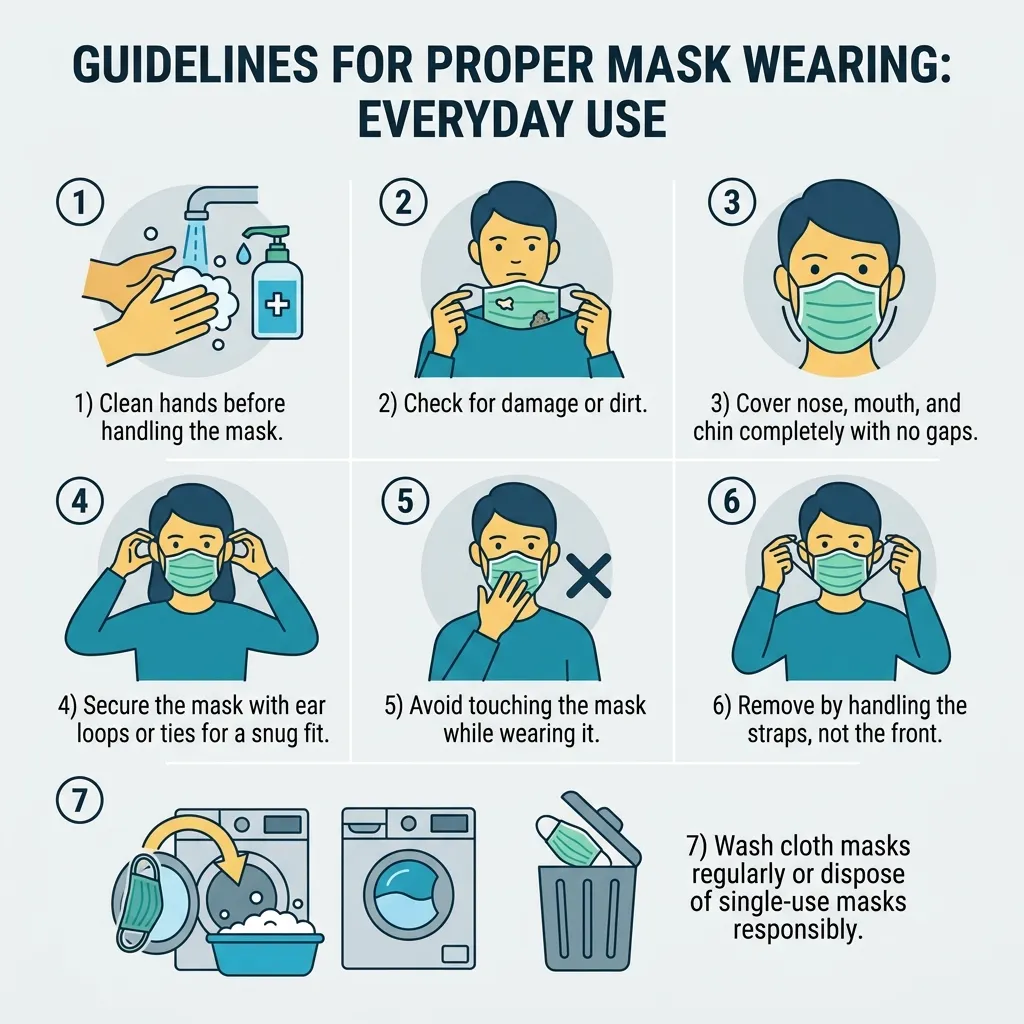
Health authorities emphasize that a mask must cover both the nose and the mouth completely. Leaving the nose exposed defeats the purpose of the covering, as the nasal cavity is a primary entry and exit point for respiratory droplets. The material should extend from the bridge of the nose down to the bottom of the chin.
A well-fitted mask creates a physical barrier that catches droplets expelled when you talk, cough, or sneeze. It also offers varying levels of protection to the wearer, depending on the material and fit. You should ensure the mask fits snugly against the sides of your face. Large gaps around the cheeks or the bridge of the nose allow unfiltered air to enter and exit. If you wear glasses, a proper seal at the top edge of the mask will prevent your lenses from fogging up.
What are the steps to put on a face mask safely?
Applying a mask requires strict hand hygiene to prevent transferring pathogens directly to your face. Follow these specific steps to don your protective equipment securely:
- Clean your hands thoroughly. Wash your hands with soap and water for a minimum of 20 seconds, or use an alcohol-based hand sanitizer containing at least 60% alcohol.
- Inspect the mask for defects. Check the material for any tears, holes, or soiled spots. Discard any damaged items immediately.
- Determine the correct orientation. Locate the top edge, which usually features a stiff, bendable metal strip. Identify the outside of the mask, which is typically the colored side.
- Position the mask over your face. Hold the item by the ear loops or ties. Secure the loops behind your ears or tie the bands firmly behind your head.
- Secure the nosepiece. Pinch the metal strip over the bridge of your nose so it molds to the exact shape of your face.
- Pull the bottom edge down. Ensure the lower portion of the fabric hooks securely beneath your chin.
What is the correct way to use a surgical face mask?
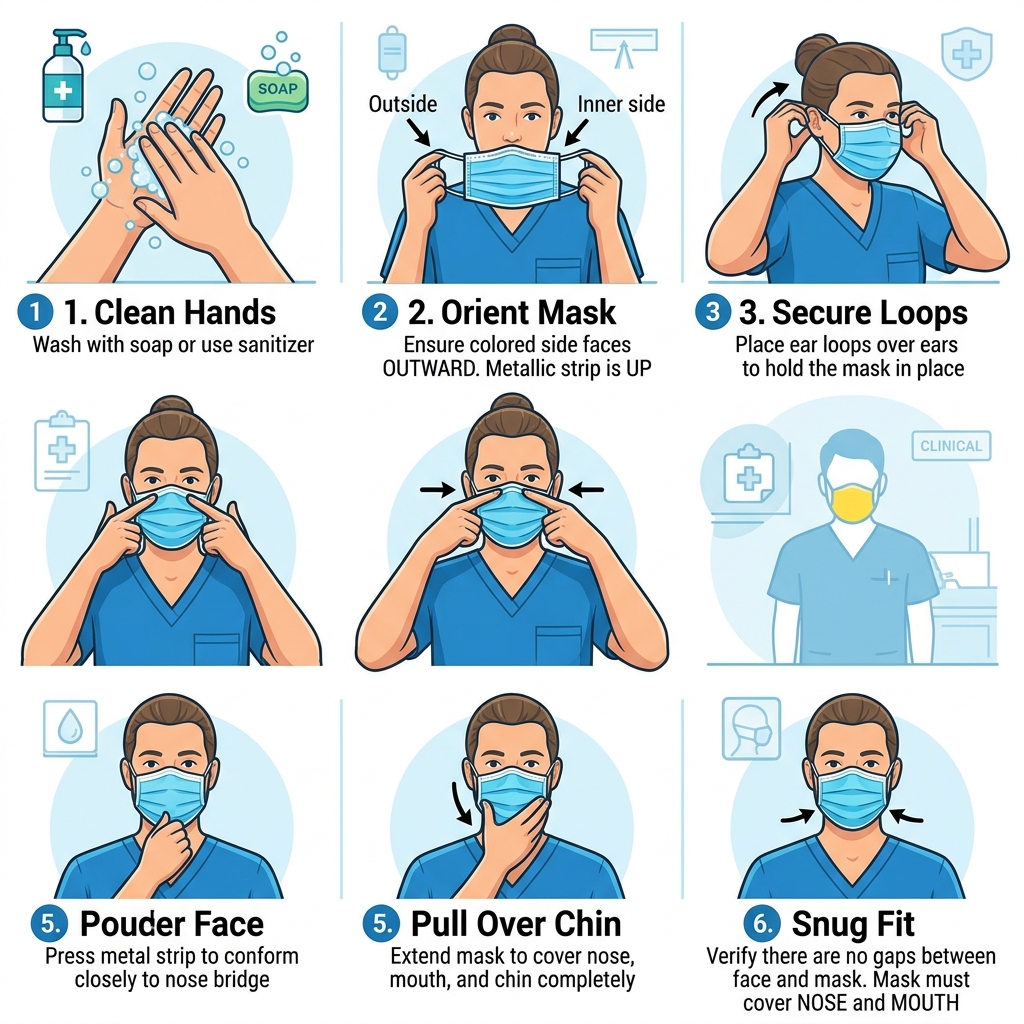
Surgical masks are loose-fitting, disposable devices designed to protect the wearer against large droplets, splashes, and sprays of bodily fluids. They are fundamentally different from cloth face coverings due to their specialized melt-blown polymer layers.
To use a surgical mask correctly, always wear the colored side facing outward. The blue or green layer is treated to be fluid-resistant, repelling incoming moisture. The white inner layer is highly absorbent, designed to catch the moisture you exhale. Wearing the mask inside out forces the absorbent layer to draw environmental moisture toward your face, entirely compromising the protective design. Ensure the pleats point downward on the outside. This prevents airborne particles and droplets from collecting in the folds of the fabric.
How do you adjust a medical mask properly to avoid gaps?
Medical masks often leave substantial gaps on the sides of the cheeks, especially for individuals with smaller facial structures. Air takes the path of least resistance. If gaps exist, unfiltered air will bypass the mask’s filtering material entirely.
To achieve a tighter fit, you can use the “knot and tuck” method. Knot the ear loops exactly where they join the edge of the mask. Then, fold the unneeded material flat and tuck the edges inside the mask. This technique pulls the sides flush against your cheeks. Alternatively, you can use a mask brace or fitter. These solid frames fit directly over the medical mask, pressing the edges tightly against your skin and significantly increasing the overall filtration efficiency.
How do you wear an N95 mask correctly for maximum protection?
N95 respirators offer a much higher level of protection than standard surgical masks, filtering out at least 95% of airborne particles. However, an N95 only provides this level of safety if it forms a tight seal around the entire perimeter of the device.
To don an N95, cup the respirator in your hand with the nose piece at your fingertips, allowing the headbands to hang freely below your hand. Position the respirator under your chin with the nose piece facing upward. Pull the top strap over your head, resting it high at the back of your head. Next, pull the bottom strap over your head and position it around the neck, below your ears. Never crisscross the straps.
Use both hands to mold the metal nose clip to the shape of your nose. Using only one hand can create an improper fit and result in a sharp angle that leaks air. Finally, perform a user seal check. Place both hands completely over the respirator and exhale sharply. If air leaks around your nose, readjust the nosepiece. If air leaks at the mask edges, adjust the straps backward along the sides of your head.
What are the best face mask fitting instructions for a snug seal?
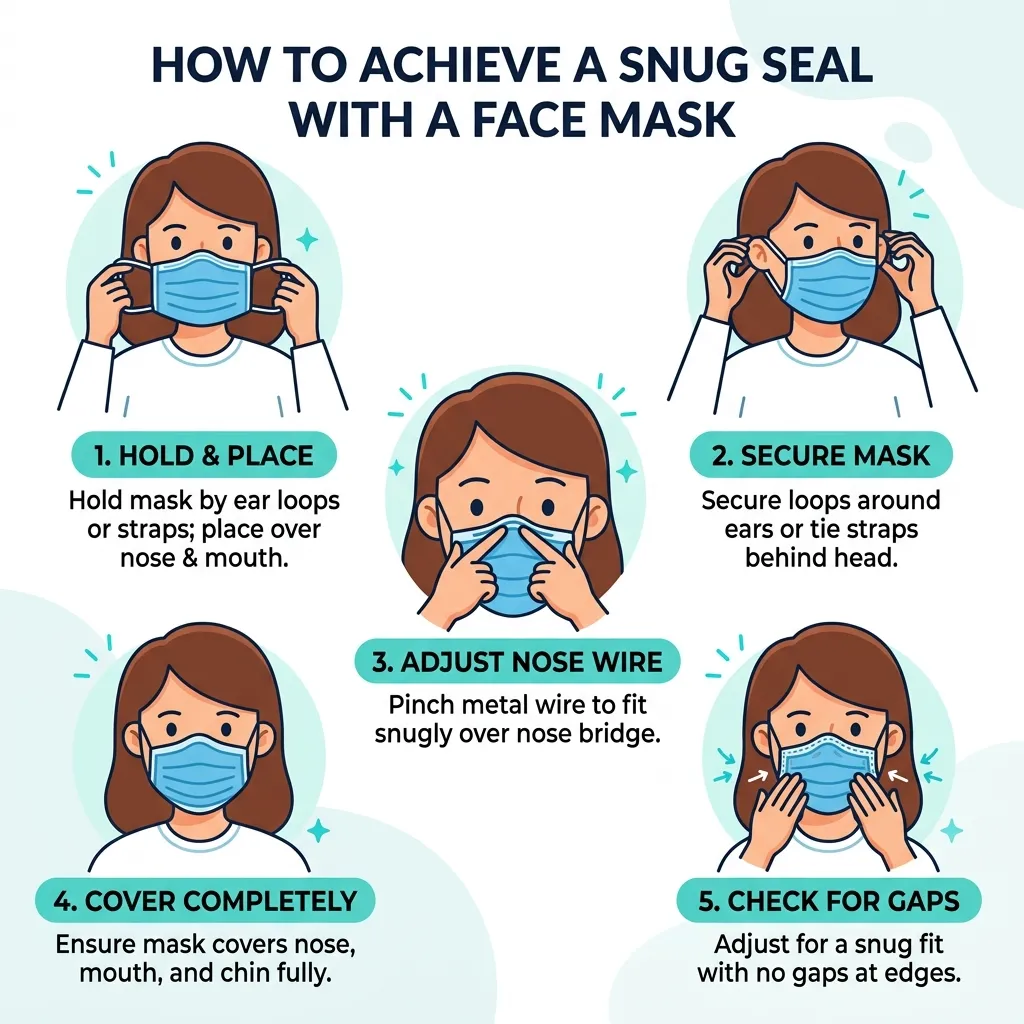
A snug seal dictates the performance of any respiratory protective device. You can verify your fit through a few simple observational checks. First, check for air leaks by cupping your hands around the outside edges of the mask. Breathe in and out forcefully. You should not feel any air blowing out toward your eyes or escaping from the sides.
Second, observe the material as you breathe. A properly sealed mask will slightly inflate when you exhale and collapse inward when you inhale. If the fabric does not move at all, air is likely escaping through gaps rather than passing through the filtration layers. If you have a beard or significant facial hair, achieving a tight seal is extremely difficult. Trimming facial hair or using a secondary mask over the primary respirator can help compress the hair and improve the barrier.
How can you wear and remove a mask without touching your face?
The front surface of a used face mask is highly contaminated. Adjusting the face mask, pulling it down around your neck, or pushing it up onto your forehead transfers trapped pathogens directly to your skin and hands.
If you must touch the face mask to adjust the fit, sanitize your hands immediately afterward. When it is time to remove the face mask, rely strictly on the ear loops or ties. Tilt your head forward slightly. Grasp the ear loops or untie the bottom string followed by the top string. Pull the face mask away from your face without letting the outside fabric brush against your clothing, eyes, or mouth. Place disposable face mask directly into a lined trash bin. For reusable cloth face mask, place them directly into a washing machine or a dedicated, breathable laundry bag. Wash your hands thoroughly immediately after completing the removal process.
What are the top mask hygiene and usage tips for daily wear?
Maintaining hygiene prevents your protective gear from becoming a source of infection. Never reuse disposable surgical masks or heavily soiled N95 respirators. Single-use items degrade quickly with moisture and physical wear.
If you utilize reusable cloth masks, wash them after every single day of use. You can include them with your regular laundry using standard detergent and the warmest appropriate water setting for the cloth. Dry them completely in a warm or hot dryer; damp masks harbor bacteria and impede breathing.
Carry spare masks in a clean, resealable plastic bag when you leave home. If your primary mask becomes damp from sweat, rain, or heavy breathing, its filtration efficiency drops dramatically. Swap out a damp mask for a fresh, dry one immediately. Never share masks with other individuals, even within the same household.
When should you wear a protective mask in public spaces?
The decision to wear a mask depends on local health mandates, personal risk factors, and environmental conditions. You should prioritize wearing high-quality protective masks in crowded indoor environments where physical distancing is impossible. Public transportation, airplanes, concert halls, and busy retail stores represent high-risk areas due to poor ventilation and dense crowds.
Choose an N95 or KN95 mask if you are at high risk for severe illness, or if you are caring for someone who is sick. Additionally, if you exhibit any symptoms of a respiratory infection—such as coughing, sneezing, or a sore throat—wearing a mask protects those around you by containing your infectious droplets. Masking remains a highly effective, adaptable tool for managing public health risks and maintaining personal safety in unpredictable environments.
Next Steps for Safe Respiratory Hygiene
Properly wearing a face mask is a fundamental skill for navigating public health challenges. By understanding the distinct differences between surgical devices, cloth coverings, and respirators, you can make informed decisions about your personal protective equipment. Focus on achieving a tight seal, handling the materials strictly by the straps, and maintaining rigorous hand hygiene before and after use. Commit to inspecting your masks regularly and replacing them as soon as they become compromised or damp.
Frequently Asked Questions
What is the primary difference between a surgical mask and an N95 respirator?
Surgical masks are loose-fitting devices designed to block large droplets and protect others from your emissions. N95 respirators form a tight seal against the face and filter out at least 95% of small airborne particles, protecting the wearer from inhaling pathogens.
How often do you need to wash a reusable cloth face mask?
You must wash a reusable cloth mask after every day of use. Place it in a standard washing machine with detergent and dry it completely on high heat to eliminate any accumulated bacteria or viral particles.
Can you wear two masks at the same time for better protection?
Yes, layering a well-fitted cloth mask over a disposable surgical mask can improve the overall seal and increase filtration efficiency. However, you should never wear two disposable medical masks together, and you should not wear any additional mask over an N95 respirator.
What should you do if your mask causes your glasses to fog up?
Fogging indicates that exhaled air is escaping through the top of your mask. Pinch the metal nose wire tightly against the bridge of your nose to seal the gap. You can also wash your glasses with soapy water and let them air dry to create a temporary anti-fog film.
Is it safe to pull a mask down to your chin to eat or drink?
No, pulling a mask down to your neck or chin exposes the clean interior of the mask to potentially contaminated skin and clothing. Instead, completely remove the mask by the ear loops and store it safely while you consume food or beverages.
How do you properly wear a face mask?
Wash your hands first, hold the mask by the straps, and place it over your nose, mouth, and chin, ensuring a snug fit without gaps.
Should a mask cover both nose and mouth?
Yes, a mask must cover both the nose and mouth completely to provide effective protection.
How tight should a face mask be?
It should fit snugly against the sides of your face without gaps but still allow comfortable breathing.
Can I touch the front of my mask while wearing it?
No, touching the front increases the risk of contamination. Always handle it by the straps.
How do I remove a mask safely?
Remove it using the ear loops or ties only, avoiding contact with the front, and dispose or store it properly.
How often should I replace a disposable mask?
Disposable masks should be replaced when they become damp, dirty, or after a single use.
Can I reuse a cloth mask?
Yes, but it must be washed after every use with soap or detergent and fully dried.
Why does my mask fog up my glasses?
Fogging happens due to air leaking from the top; tightening the nose bridge helps prevent this.
Is it okay to pull the mask down under my chin?
No, pulling it down can contaminate the inside surface and reduce its effectiveness.
What is the most important mask-wearing rule?
The most important rule is maintaining proper fit and hygiene before, during, and after wearing the mask.
