


Surgical mask fluid resistance is essential for protecting healthcare workers from blood, bodily fluids, and respiratory droplets during medical procedures. Understanding ASTM fluid resistance levels, proper mask selection, and infection control standards helps ensure the right level of protection for every clinical environment.
Fluid resistant surgical masks are designed to protect healthcare workers from blood, bodily fluids, and respiratory droplets. Resistance levels are standardized by ASTM testing (Level 1, 2, or 3), with higher levels offering greater splash and fluid protection. Choosing the right level depends on the clinical setting and procedure type.
Healthcare settings expose workers to hazards that most people never think about—high-pressure fluid splashes during surgery, respiratory droplets from coughing patients, and aerosolized blood during procedures. A standard disposable face covering offers little protection against these risks. That’s where fluid resistant surgical masks come in.
Fluid protection in medical-grade surgical masks is governed by standardized testing protocols, most notably the ASTM classification system. Understanding these standards isn’t just a box-ticking exercise—it’s the difference between a mask that protects and one that merely looks like it does.
This post breaks down everything healthcare workers, procurement teams, and infection control officers need to know about surgical mask fluid resistance: how it’s measured, what the ASTM levels mean, and how to choose the right mask for the right setting.
What Does “Fluid Resistant” Mean in a Surgical Mask?
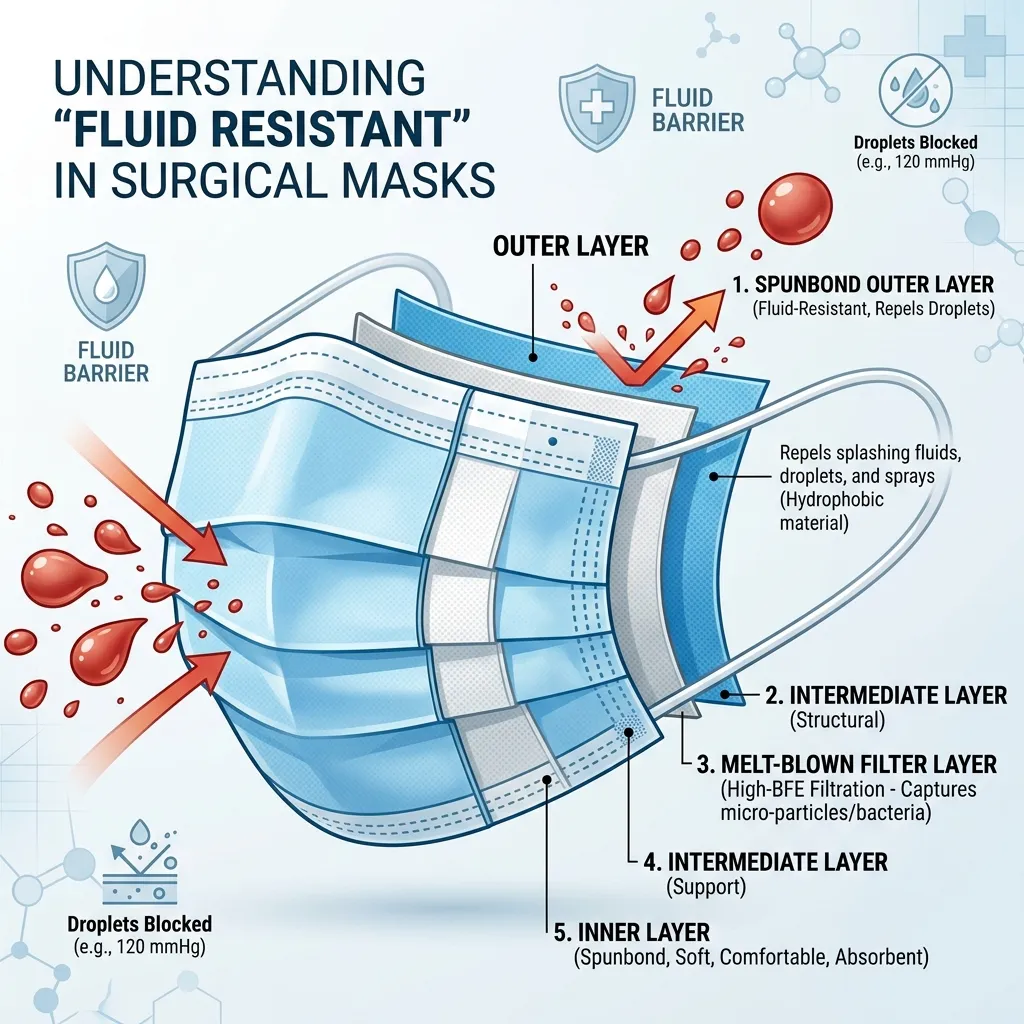
A fluid resistant surgical mask is one that has been engineered—and independently tested—to resist penetration from liquids under pressure. This includes blood, saliva, respiratory secretions, and other bodily fluids that may be encountered during clinical procedures.
Fluid resistance is not a binary feature. A mask either meets a specific resistance threshold or it doesn’t, and those thresholds are defined by the procedure type and the level of splash or spray exposure expected. A mask used during a routine consultation requires far less fluid protection than one worn in an operating theater during an open surgical procedure.
The key mechanisms that enable fluid resistance include hydrophobic outer layers, filtration media, and structural barriers that prevent liquid from wicking through the material to the wearer’s mouth and nose.
How Is Surgical Mask Fluid Resistance Tested?
What is the ASTM F2100 standard for surgical masks?
The most widely used standard for classifying medical face mask fluid resistance is ASTM F2100, developed by ASTM International. This standard evaluates masks across five performance criteria:
- Bacterial Filtration Efficiency (BFE): Measures the mask’s ability to filter bacteria-containing droplets
- Fluid Resistance: Tests resistance to synthetic blood penetration at varying pressures
- Differential Pressure: Assesses breathability
- Particulate Filtration Efficiency (PFE): Measures sub-micron particle filtration
- Flame Spread: Evaluates flammability resistance
Fluid resistance specifically is tested using ASTM F1862, which involves directing synthetic blood at the mask at pressures of 80, 120, and 160 mmHg. These pressures correspond to real-world clinical conditions ranging from low to high fluid exposure risk.
What does the mmHg pressure rating mean for fluid protection?
The mmHg ratings map directly to the three ASTM performance levels:
- Level 1 (80 mmHg): Low fluid exposure risk environments
- Level 2 (120 mmHg): Moderate fluid exposure risk
- Level 3 (160 mmHg): High fluid exposure risk, including surgical settings with significant splash or spray
To put this in perspective, arterial blood pressure in an adult typically ranges from 80 to 120 mmHg. A Level 3 mask is designed to withstand pressures above that range—critical during surgical procedures where arterial bleeders or high-pressure irrigation may be encountered.
Understanding ASTM Level Surgical Mask Classifications
What is the difference between ASTM Level 1, Level 2, and Level 3 surgical masks?
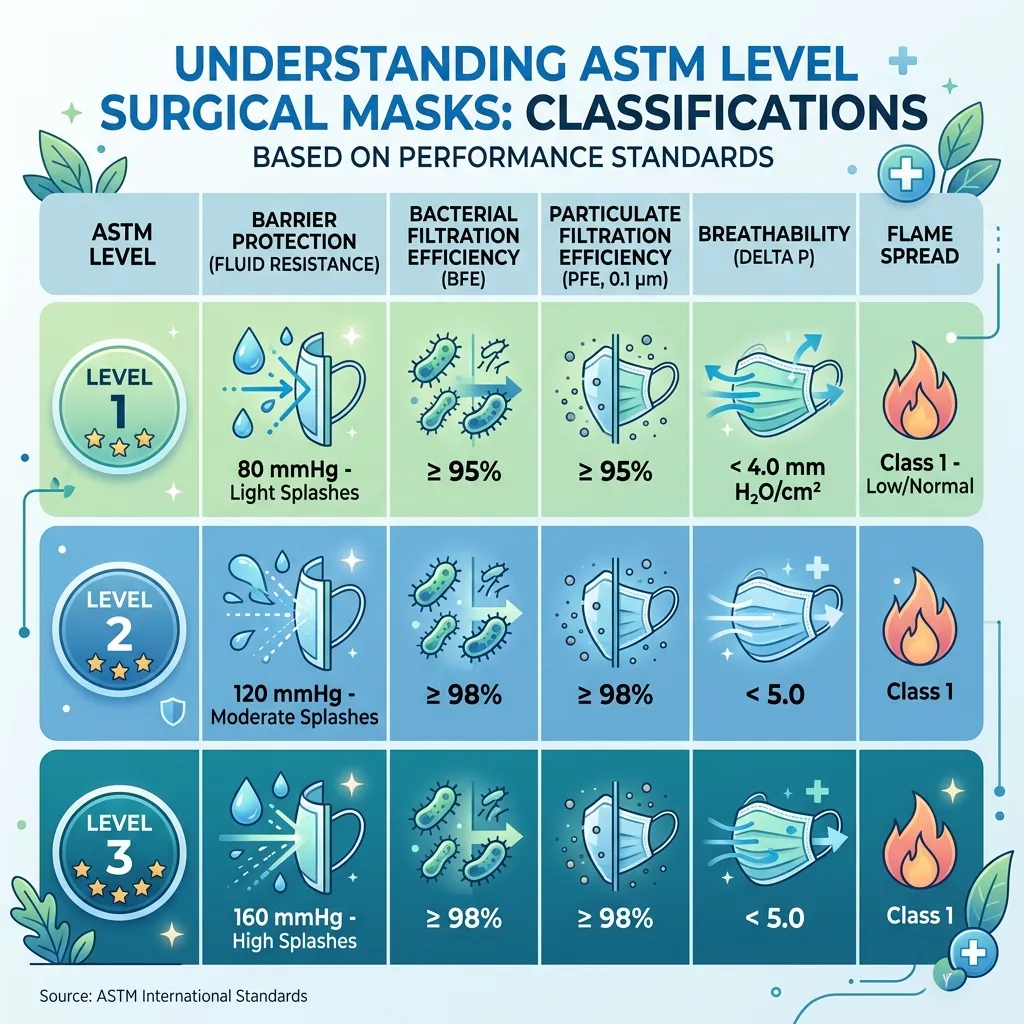
Each ASTM level surgical mask classification serves a distinct clinical purpose. Here’s how they compare:
ASTM Level 1 – Low Barrier Protection
- Fluid resistance: 80 mmHg
- BFE: ≥95%
- PFE: ≥95% (at 0.1 micron)
- Best for: General patient care, standard examinations, low-aerosol procedures
ASTM Level 2 – Moderate Barrier Protection
- Fluid resistance: 120 mmHg
- BFE: ≥98%
- PFE: ≥98% (at 0.1 micron)
- Best for: Procedures with moderate fluid or aerosol exposure, minor surgical procedures, emergency care
ASTM Level 3 – Maximum Barrier Protection
- Fluid resistance: 160 mmHg
- BFE: ≥98%
- PFE: ≥98% (at 0.1 micron)
- Best for: High-risk surgical procedures, procedures involving heavy splash, spray, or aerosol generation
The decision between levels should never default to “highest available.” Over-specifying can create unnecessary cost and reduced breathability for staff in low-risk settings—both of which affect comfort and compliance over long shifts.
Medical Fluid Resistant Mask Options: Disposable vs. Reusable
Are disposable surgical face masks better than reusable options for fluid protection?
For most clinical environments, disposable surgical face masks remain the standard of care for fluid protection. Here’s why:
Disposable masks offer consistent, manufacturer-verified fluid resistance with every use. Reusable options—while more sustainable—carry the risk of compromised fluid resistance if not laundered and maintained according to strict protocols. Hydrophobic coatings can degrade with washing, and standard hospital laundry processes are not always designed to preserve the structural integrity of fluid-resistant layers.
That said, some reusable medical-grade options have received ASTM certification and can perform comparably when managed correctly. The key question is whether your facility has the systems in place to ensure consistent compliance.
For single-use settings, a disposable surgical face mask rated to the appropriate ASTM level will always be the more reliable choice.
Splash Resistant vs. Fluid Resistant: Is There a Difference?
The terms “splash resistant” and “fluid resistant” are often used interchangeably in product marketing, but there is a meaningful technical distinction worth understanding.
Fluid resistant refers to resistance against pressurized liquid—specifically tested under the ASTM F1862 synthetic blood protocol described above.
Splash resistant is a broader, less standardized term. A mask marketed as splash resistant may repel low-pressure droplets or light fluid contact without meeting any formal ASTM fluid resistance threshold.
For healthcare workers in clinical environments, always look for ASTM-certified fluid resistance rather than relying on splash resistant labeling alone. The certification provides a verifiable, standardized baseline that marketing language does not.
Surgical Masks and Infection Control: The Bigger Picture
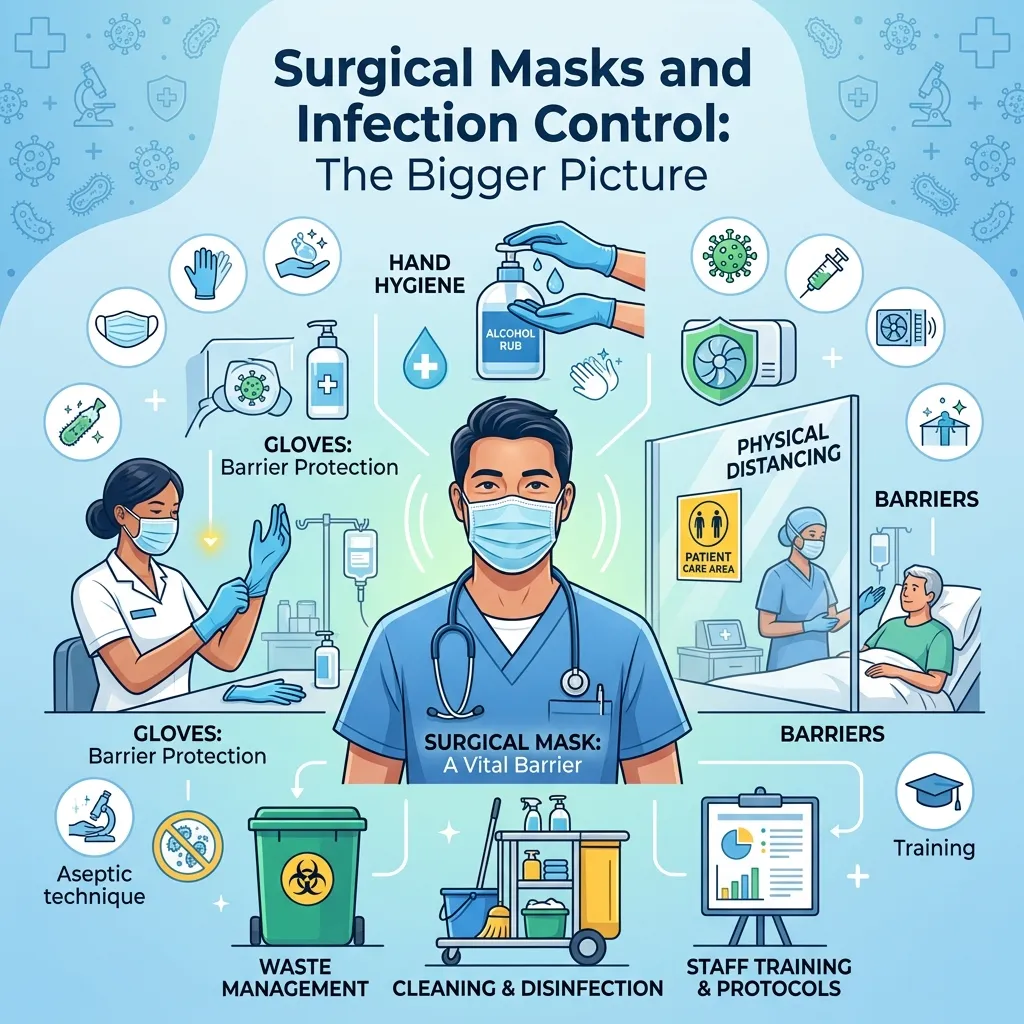
How do fluid resistant surgical masks contribute to infection control in healthcare settings?
Fluid resistant surgical masks are one component of a broader infection control framework. Used correctly, they serve two simultaneous functions: protecting the wearer from patient-derived fluids and pathogens, and protecting the patient from respiratory microorganisms shed by the healthcare worker.
According to the CDC, surgical masks—when fluid resistant and properly fitted—are appropriate PPE for most patient care activities involving potential exposure to blood or body fluids. They are not, however, a substitute for N95 respirators in settings requiring airborne precautions (such as TB or measles isolation).
Key infection control considerations when selecting a surgical mask for healthcare workers include:
- Fit and seal: Even a Level 3 mask provides limited protection if there are significant gaps around the edges
- Compliance duration: Breathability (measured by differential pressure) affects how long staff can comfortably wear masks without breaking protocol
- Compatibility with other PPE: Masks should integrate effectively with eye protection, face shields, and gowns
- Storage and expiration: Fluid resistance can degrade over time if masks are improperly stored; always check manufacturer shelf-life guidance
How to Choose the Right Medical-Grade Surgical Mask for Your Setting
What factors should healthcare facilities consider when selecting fluid resistant surgical masks?
Choosing the right mask comes down to three primary factors:
1. Procedure type and fluid exposure risk
Map your clinical procedures to the appropriate ASTM level. Routine consultations, triage, and general ward care typically fall within Level 1. Procedures involving irrigation, cauterization, or significant bleeding warrant Level 2 or Level 3.
2. Regulatory and accreditation requirements
Many healthcare facilities operate under accreditation standards that specify minimum PPE requirements. Ensure your mask selection aligns with relevant guidelines from bodies such as the CDC, WHO, OSHA, or your country’s health authority.
3. Comfort and breathability for extended wear
A mask that staff find uncomfortable will be worn incorrectly—or not at all. Differential pressure ratings (measured in mm H₂O/cm²) provide an objective measure of breathability. Lower values indicate easier airflow. ASTM Level 1 masks typically have the lowest differential pressure and are most comfortable for extended wear in low-risk settings.
The Bottom Line on Surgical Mask Fluid Resistance
Fluid resistance is one of the most clinically significant—and most frequently misunderstood—features of surgical masks. The ASTM classification system provides a clear, evidence-based framework for matching mask performance to clinical risk. Level 1 for routine care, Level 2 for moderate exposure, Level 3 for surgical and high-risk environments.
For infection control teams and procurement managers, standardizing mask selection based on ASTM level rather than cost alone will consistently deliver better outcomes—for staff safety, patient protection, and regulatory compliance.
When in doubt, consult your facility’s infection control policy and cross-reference with the latest CDC or WHO guidance on PPE selection for specific procedures.
Frequently Asked Questions
What is a fluid resistant surgical mask?
A fluid resistant surgical mask is a medical-grade face mask engineered to resist penetration from blood and bodily fluids under pressure. Fluid resistance is measured in mmHg using synthetic blood, and masks are classified under ASTM F2100 into Level 1 (80 mmHg), Level 2 (120 mmHg), or Level 3 (160 mmHg) based on their performance.
What ASTM level surgical mask should healthcare workers use?
The appropriate ASTM level depends on the clinical setting. Level 1 suits routine, low-exposure environments. Level 2 is appropriate for moderate-risk procedures. Level 3 is recommended for surgeries and procedures with a high risk of blood splash or aerosol generation.
Is a fluid resistant surgical mask the same as an N95 respirator?
No. Fluid resistant surgical masks protect against fluid penetration and large respiratory droplets but do not form an airtight seal against the face. N95 respirators are designed to filter airborne particles and require fit-testing. For airborne precaution settings, N95 respirators are the appropriate choice; for splash and fluid protection in surgical environments, ASTM-rated fluid resistant surgical masks are standard.
How long can a disposable surgical face mask be worn?
Most manufacturers recommend replacing disposable surgical face masks after each patient encounter or procedure, or immediately if the mask becomes wet, soiled, or damaged. Fluid resistance can be compromised once the mask is saturated, regardless of its ASTM level.
Can fluid resistant surgical masks be reused or sterilized?
Standard disposable surgical masks are designed for single use and should not be reused. Some reusable options with ASTM certification exist, but their fluid resistance must be validated after each laundering cycle to ensure performance is maintained.
What is the difference between a splash resistant and fluid resistant surgical mask?
“Fluid resistant” refers to a mask that has passed ASTM F1862 pressurized synthetic blood testing. “Splash resistant” is a non-standardized marketing term and does not guarantee the same level of certified protection. For clinical use, always verify ASTM fluid resistance certification rather than relying on splash resistant labeling.
What is surgical mask fluid resistance?
Surgical mask fluid resistance refers to a mask’s ability to prevent blood, bodily fluids, and respiratory droplets from penetrating the mask during medical procedures.
Why is surgical mask fluid resistance important?
It helps protect healthcare professionals from exposure to infectious fluids, reducing the risk of contamination and improving workplace safety.
What are the ASTM levels for surgical mask fluid protection?
ASTM Level 1 provides low fluid resistance, Level 2 offers moderate protection, and Level 3 delivers the highest level of fluid resistance for high-risk procedures.
How is surgical mask fluid resistance tested?
It is tested using the ASTM F1862 standard, which measures a mask’s ability to resist penetration by synthetic blood at different pressure levels.
Is a fluid-resistant surgical mask the same as an N95 respirator?
No. Fluid-resistant surgical masks protect against fluid splashes and droplets, while N95 respirators provide a tight seal and filter airborne particles.
Which surgical mask fluid resistance level is best for surgery?
ASTM Level 3 masks are generally recommended for surgical procedures involving high fluid exposure and blood splashes.
Can disposable fluid-resistant surgical masks be reused?
No. Most disposable surgical masks are designed for single use and should be replaced after each procedure or when they become wet or damaged.
How do I choose the right fluid-resistant surgical mask?
Select the appropriate ASTM level based on the expected fluid exposure, procedure type, comfort requirements, and healthcare guidelines.
What is the difference between splash-resistant and fluid-resistant surgical masks?
Fluid-resistant masks are ASTM-certified for specific pressure levels, while splash-resistant is a general marketing term that may not indicate standardized testing.
Who should use fluid-resistant surgical masks?
Healthcare workers, surgeons, nurses, dentists, and other medical professionals performing procedures with potential exposure to blood or bodily fluids should use fluid-resistant surgical masks.
