


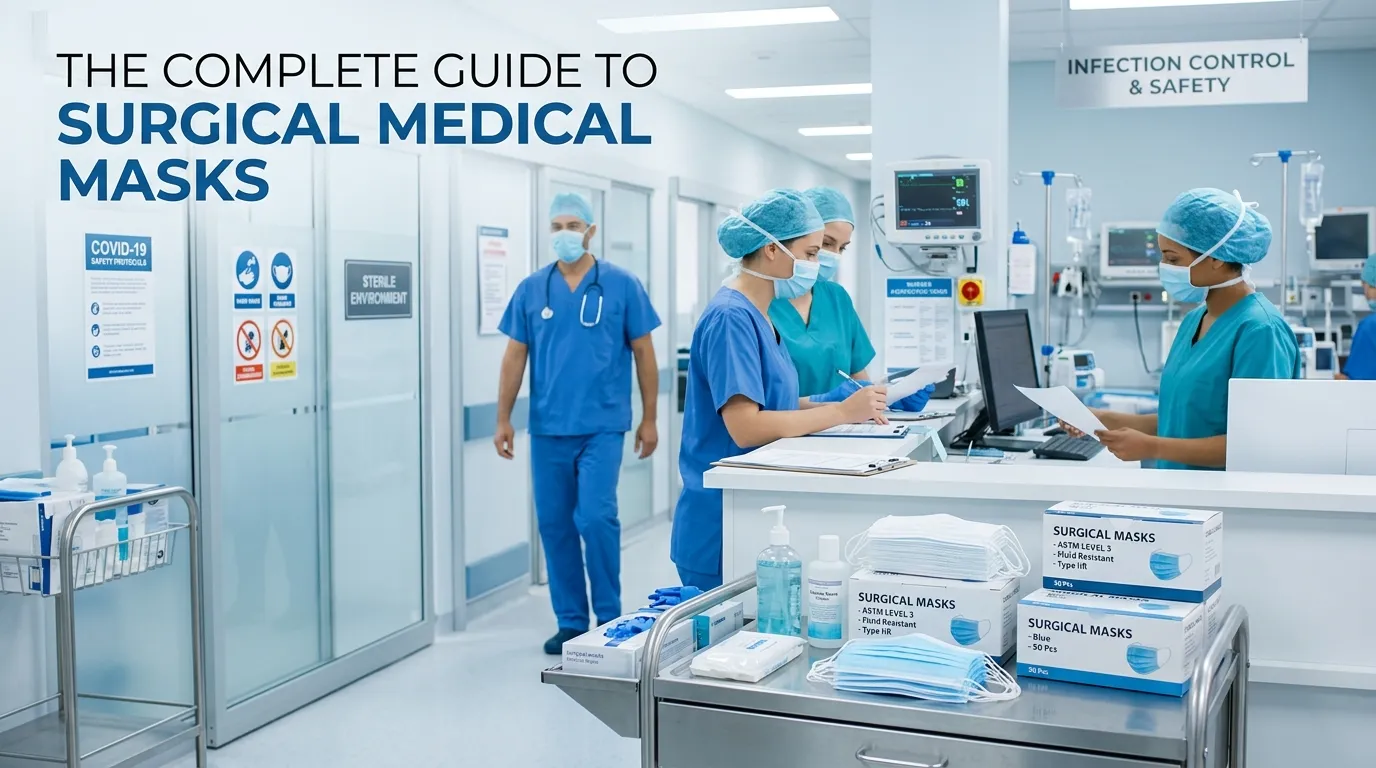
Surgical medical masks are single-use protective face coverings designed to reduce the spread of bacteria, viruses, and respiratory droplets. When choosing a mask, it’s important to consider factors such as bacterial filtration efficiency (BFE), ASTM rating, breathability, fluid resistance, and skin comfort. High-quality surgical medical masks provide reliable protection in healthcare settings and everyday environments while supporting effective infection control practices.
Surgical medical masks are single-use, FDA-regulated protective devices designed to block bacterial and viral transmission. Key factors to evaluate include bacterial filtration efficiency (BFE), fluid resistance, breathability, and skin compatibility. This guide covers everything from material layers to certification standards to help you choose the right mask for your setting.
Surgical masks have become one of the most scrutinized pieces of personal protective equipment in modern healthcare—and for good reason. Hospitals, clinics, and everyday users alike rely on them to reduce the spread of pathogens, yet the market is flooded with options that vary widely in quality, certification, and performance.
Choosing the wrong mask isn’t just an inconvenience. In a clinical setting, it can compromise infection control protocols. For everyday use, it can mean the difference between adequate protection and a false sense of security.
This guide breaks down everything you need to know about surgical medical masks—from how their three-layer construction works to what FDA approval and bacterial filtration efficiency ratings actually mean. Whether you’re stocking a hospital ward, managing a dental clinic, or simply looking for reliable daily protection, you’ll find clear, practical guidance here.
What Are Disposable Surgical Medical Masks and How Do They Work?

Disposable surgical medical masks are single-use, loose-fitting face coverings designed to protect both the wearer and those nearby from the transfer of infectious agents. Unlike respirators (such as N95s), surgical masks are not sealed to the face. Their primary purpose is to block large respiratory droplets, splatter, and sprays.
The masks work through a combination of mechanical filtration and electrostatic charge. The middle melt-blown layer—more on this below—captures particles through both physical interception and electrostatic attraction, which allows it to trap bacteria and some viral particles even when they’re smaller than the mesh openings.
Because they’re disposable, surgical masks must be replaced after each patient encounter or when they become damp, damaged, or visibly soiled. Reusing a single-use mask reduces its filtration efficiency and increases cross-contamination risk.
How Does the 3-Ply Design of Surgical Face Masks Provide Protection?
The standard 3-ply surgical face mask consists of three bonded layers, each serving a distinct function:
- Outer layer (spunbond polypropylene): Water-resistant and fluid-repellent, this layer deflects droplets and splatter away from the mask’s interior.
- Middle layer (melt-blown polypropylene): This is the filtration core. Melt-blown fabric is engineered from ultrafine fibers that create a dense, electrostatic barrier. A high-quality middle layer is what separates a medical-grade mask from a basic cloth covering.
- Inner layer (soft spunbond or non-woven fabric): Designed for skin comfort, the inner layer absorbs moisture from breathing and reduces irritation during extended wear.
The ear loops—typically made from elastic polyester or latex-free thermoplastic rubber—secure the mask in place without requiring ties or straps. Ear loop masks are easier and faster to don and doff, making them the standard choice in high-volume clinical environments like hospitals and outpatient clinics.
When all three layers are properly bonded and the ear loops are securely attached, the mask maintains its structural integrity throughout the period of intended use.
What Does Medical-Grade Mean for Surgical Masks in Healthcare Settings?

Not all disposable masks marketed as “surgical” meet medical-grade standards. A genuinely medical-grade surgical mask must meet specific regulatory benchmarks for filtration, fluid resistance, breathability, and flammability.
In the United States, the Food and Drug Administration (FDA) regulates surgical masks as Class II medical devices under 21 CFR Part 878. To legally market a surgical mask in the U.S., manufacturers must submit a 510(k) premarket notification and demonstrate that the product is substantially equivalent to a legally marketed predicate device.
FDA-approved surgical medical face masks must also meet performance standards outlined by ASTM International, particularly ASTM F2100. This standard classifies masks into three levels:
- Level 1 (Low Barrier): Suitable for low-risk, short-duration procedures.
- Level 2 (Moderate Barrier): For procedures with moderate fluid exposure risk.
- Level 3 (High Barrier): For procedures involving heavy fluid, spray, or aerosol exposure.
Healthcare procurement teams should confirm the ASTM level of any mask before deploying it in a specific clinical setting.
What Is Bacterial Filtration Efficiency (BFE) and Why Does It Matter?
Bacterial filtration efficiency (BFE) is one of the most critical metrics for evaluating surgical masks. BFE measures the percentage of aerosolized bacteria a mask filters out under standardized test conditions, using Staphylococcus aureus as the test organism per ASTM F2101.
High-quality surgical masks achieve a BFE of ≥98%, meaning they block at least 98 out of every 100 bacterial particles under test conditions. Masks with lower BFE ratings may be acceptable for low-risk environments but are generally not recommended for surgical suites or active patient care.
BFE testing is also related to—but distinct from—particulate filtration efficiency (PFE), which measures performance against submicron particles, including viral aerosols. For comprehensive infection control, look for masks that report both BFE and PFE ratings, ideally at ≥95% for each.How Are Certified Surgical Masks Used for Infection Control in Clinical Settings?
Infection control in hospitals and clinics depends heavily on consistent, standardized mask use. Certified surgical masks for infection control are deployed across a wide range of clinical scenarios, including:
- Surgical procedures: Protecting sterile fields from the surgical team’s respiratory secretions.
- Patient triage and examination: Reducing droplet transmission between healthcare workers and patients.
- Isolation precautions: Used alongside other PPE in standard, contact, and droplet precaution protocols.
- Procedural settings: Endoscopy suites, dental operatories, and wound care environments.
For infection control purposes, the U.S. Centers for Disease Control and Prevention (CDC) recommends that surgical masks used in healthcare meet at minimum the ASTM F2100 Level 1 standard, with Level 2 or 3 preferred for higher-risk procedures.
Certification documentation—including lot numbers, BFE ratings, and regulatory clearance—should be retained by healthcare facilities for compliance and audit purposes.
What Makes a Surgical Mask Truly Breathable for Extended Wear?
Breathability is measured by differential pressure (ΔP), which quantifies the resistance to airflow across the mask. Lower differential pressure equals easier breathing. ASTM F2100 sets maximum ΔP thresholds at each protection level—Level 1 masks permit up to 4.0 mm H₂O/cm², while Level 3 masks allow up to 5.0 mm H₂O/cm².
For healthcare workers wearing masks throughout long shifts, breathability directly affects compliance and comfort. A mask that is too restrictive discourages proper wear, which undermines its protective value entirely.
Breathable disposable medical face masks typically use lighter-weight melt-blown layers optimized for airflow without sacrificing filtration performance. Some manufacturers also add a moldable nose wire and contoured design to minimize air gaps while reducing the pressure on the bridge of the nose.
When evaluating masks for high-volume clinical use, request differential pressure data alongside BFE ratings. Both metrics together give a complete picture of performance.
Are Hypoallergenic Surgical Masks Available for People With Sensitive Skin?
Extended mask use is associated with a range of skin reactions, from mild irritation and acne mechanica (mask-related breakouts) to contact dermatitis triggered by dyes, adhesives, or latex in ear loops.
Hypoallergenic surgical masks for sensitive skin address these issues through several design choices:
- Latex-free ear loops: Eliminating natural rubber latex removes one of the most common contact allergens in healthcare settings.
- Non-woven soft inner layers: Softer inner fabrics reduce friction and moisture buildup against the skin.
- No added fragrances or dyes: Some lower-quality masks include pigments or deodorizing agents that can trigger reactions in sensitive individuals.
- Dermatologist-tested materials: Some manufacturers subject their mask materials to patch testing to verify hypoallergenicity.
Healthcare facilities with staff who report recurring skin reactions should consider switching to certified latex-free, fragrance-free masks as a first step before exploring dermatological interventions.
How Do Protective Surgical Face Masks Help Prevent Virus Transmission?
Surgical masks reduce viral transmission primarily by blocking large respiratory droplets—the main route for viruses like influenza, respiratory syncytial virus (RSV), and SARS-CoV-2. A 2020 systematic review published in The Lancet found that face masks were associated with a large reduction in the risk of viral infection across both healthcare and community settings.
However, surgical masks are not designed to filter fine aerosols. For protection against airborne pathogens—those transmitted via particles smaller than 5 microns suspended in the air for extended periods—N95 respirators or equivalent filtering facepiece respirators are the appropriate choice.
The protective role of surgical masks in virus prevention is therefore best understood as source control (preventing the wearer from expelling infectious droplets) combined with droplet protection (blocking incoming droplets). Both functions are clinically meaningful, especially in healthcare settings where asymptomatic transmission is a documented risk.
Single-Use Surgical Masks: Best Practices for Hospitals and Clinics
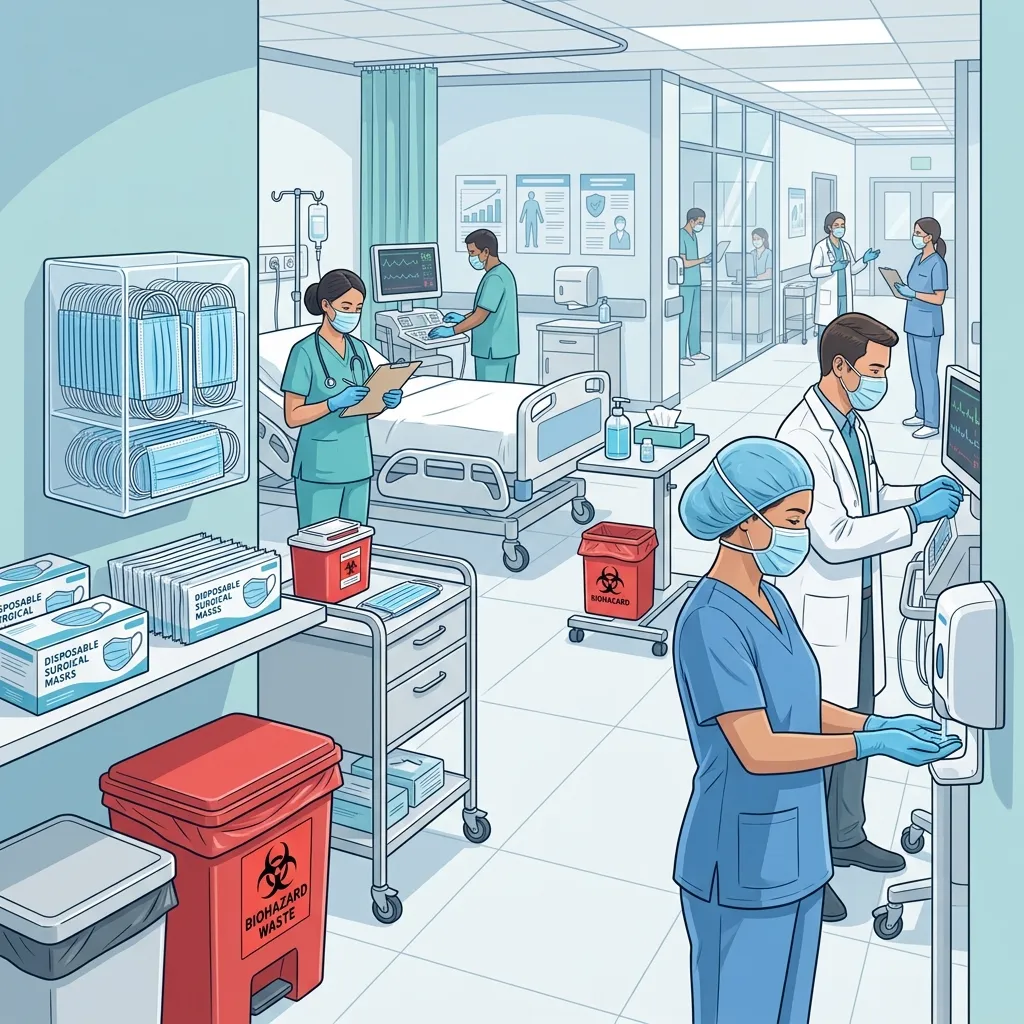
Proper single-use protocols are as important as the mask itself. In hospitals and clinics, the following practices are standard:
- One mask per patient encounter: Replace the mask between patients, not just between shifts.
- Replace when damp: Moisture degrades the electrostatic filtration layer and increases bacterial colonization.
- Do not touch the front: The outer layer may be contaminated; always handle masks by the ear loops.
- Dispose in appropriate waste streams: In healthcare, used masks should be treated as regulated medical waste where applicable.
- Store sealed until use: Masks exposed to humidity, UV light, or pressure may have compromised filtration layers before they are ever worn.
Staff training on correct donning and doffing procedure is just as critical as mask procurement. A high-quality, FDA-approved mask worn incorrectly provides significantly less protection than its specifications suggest.
How to Choose the Right Surgical Mask for Your Needs
Selecting the right mask comes down to matching the product’s specifications to your actual use case.
- Choose ASTM Level 1 if you need basic protection for low-risk, short-duration tasks—administrative healthcare settings, general clinic environments, or daily non-clinical use.
- Choose ASTM Level 2 for moderate-risk procedures with some fluid exposure—routine dental procedures, non-surgical outpatient care, or urgent care settings.
- Choose ASTM Level 3 for high-risk surgical or procedural environments where heavy fluid, spray, or aerosol exposure is anticipated.
- Prioritize BFE ≥98% and PFE ≥95% for any mask intended for active patient care.
- Look for FDA 510(k) clearance as a baseline quality assurance marker for any mask purchased for healthcare use in the United States.
- Select latex-free, hypoallergenic options for staff with known skin sensitivities or facilities with strict latex-free policies.
Frequently Asked Questions
What is the difference between a surgical mask and an N95 respirator?
Surgical masks are loose-fitting and primarily designed to block droplets and protect against fluid splatter. N95 respirators form a tight seal against the face and filter at least 95% of airborne particles, including fine aerosols. For airborne infection precautions, N95s are required; surgical masks are appropriate for droplet precautions.
What does FDA approval mean for surgical face masks?
An FDA-cleared surgical mask has undergone 510(k) premarket notification review, confirming it meets performance criteria comparable to a previously cleared device. This includes bacterial filtration efficiency, fluid resistance, differential pressure, and flammability testing under ASTM F2100.
How long can a single-use surgical mask be worn?
A single-use surgical mask should be replaced after each patient encounter, when it becomes damp or visibly soiled, or when the ear loops or structure are compromised. Manufacturers do not validate extended or multi-day use.
Are surgical masks effective against COVID-19?
Surgical masks reduce transmission of SARS-CoV-2 primarily through droplet blocking and source control. They are less effective than N95 respirators against fine aerosol transmission. The CDC recommends surgical masks as an appropriate option for many healthcare interactions, with N95 use prioritized during aerosol-generating procedures.
What BFE rating should I look for in a surgical mask?
For medical or clinical use, a BFE of ≥98% is the recommended benchmark. This is the threshold specified in ASTM F2100 for Level 2 and Level 3 masks and is consistent with CDC infection control guidance for healthcare settings.
Can people with sensitive skin use surgical masks safely?
Yes, provided they select latex-free, fragrance-free, hypoallergenic masks with soft inner layers. If skin reactions persist, consulting a dermatologist to identify the specific allergen—whether latex, dye, or adhesive—can help narrow down the right product.
What are surgical medical masks used for?
Surgical medical masks are used to help reduce the transmission of bacteria, viruses, and respiratory droplets in healthcare and public settings.
How do surgical medical masks work?
Most surgical medical masks use a 3-ply design that filters particles, blocks fluid splashes, and helps prevent contamination.
Are surgical medical masks reusable?
No, surgical medical masks are designed for single use and should be discarded after becoming damp, damaged, or contaminated.
What is the difference between surgical medical masks and N95 respirators?
Surgical medical masks protect against droplets and splashes, while N95 respirators provide a tighter seal and filter at least 95% of airborne particles.
What BFE rating should I look for in surgical medical masks?
For healthcare and medical use, surgical medical masks with a BFE rating of 98% or higher are generally recommended.
What does ASTM Level 1, 2, and 3 mean for surgical medical masks?
ASTM levels indicate protection levels, with Level 1 offering basic protection, Level 2 moderate protection, and Level 3 the highest fluid resistance for surgical environments.
Are FDA-cleared surgical medical masks better?
FDA-cleared surgical medical masks meet specific performance and safety standards, making them a reliable choice for healthcare professionals and facilities.
Can people with sensitive skin wear surgical medical masks?
Yes, many manufacturers offer hypoallergenic and latex-free surgical medical masks designed to minimize skin irritation during extended wear.
How often should surgical medical masks be replaced?
Surgical medical masks should be replaced after each use, patient interaction, or whenever they become wet, dirty, or damaged.
Are surgical medical masks effective against viruses?
Yes, surgical medical masks help reduce virus transmission by blocking respiratory droplets and providing effective source control when worn correctly.
The Bottom Line on Surgical Medical Masks
Surgical medical masks remain one of the most practical, cost-effective tools for infection control in healthcare and everyday protection. The difference between a mask that genuinely protects and one that merely looks the part comes down to a handful of measurable criteria: BFE rating, ASTM classification, FDA clearance, breathability, and material quality.
For healthcare procurement managers, specifying the right ASTM level for each clinical environment should be a non-negotiable part of PPE policy. For individual users, understanding what the certifications mean—rather than relying on packaging claims alone—puts the decision-making power where it belongs.
When in doubt, verify. Request product documentation, check FDA clearance databases, and confirm BFE data before purchasing at volume.
