


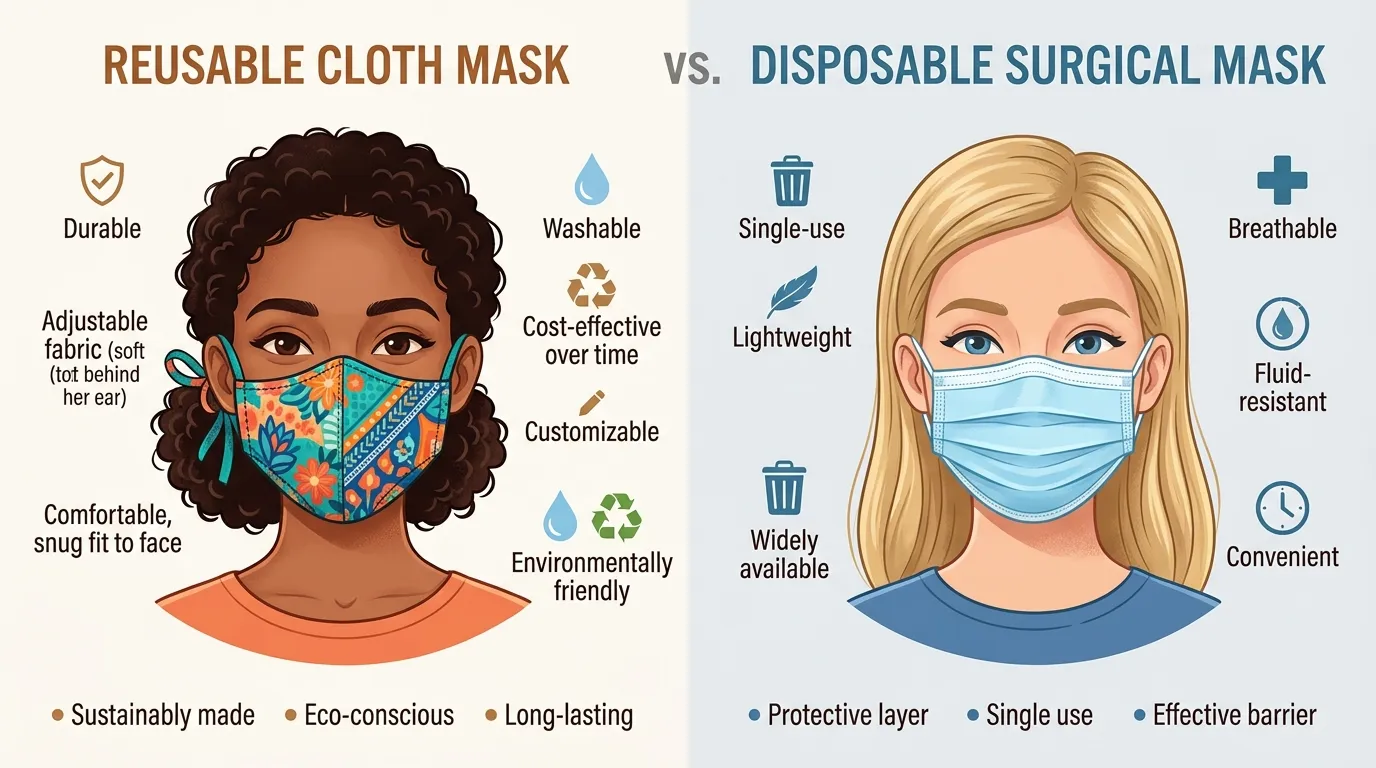
Reusable face masks are a cost-effective and eco-friendly option for everyday use, while disposable surgical and N95 masks generally provide higher filtration and virus protection. The best choice depends on your needs, budget, and environment. For many people, a combination of reusable and disposable masks offers the ideal balance of comfort, protection, and sustainability.
Reusable cloth masks are cheaper over time and better for the planet, while disposable surgical and N95 masks usually offer stronger filtration against viruses. The best choice depends on your priorities—surgical or N95 masks suit high-risk settings, while quality multi-layer cloth masks work well for everyday errands.
Choosing a face mask used to be simple. Now you’re faced with a wall of options: thin blue surgical masks, sturdy N95s, colorful cloth versions, and reusable models that promise both comfort and sustainability. Each type carries its own trade-offs in protection, cost, and environmental impact.
This guide breaks down the real differences between reusable and disposable masks. You’ll learn how each performs in terms of filtration, how much they cost over time, and which one makes the most sense for daily life. By the end, you’ll know exactly which mask fits your routine, budget, and health needs.
Let’s clear up the confusion.
What are the benefits and drawbacks of reusable face masks?
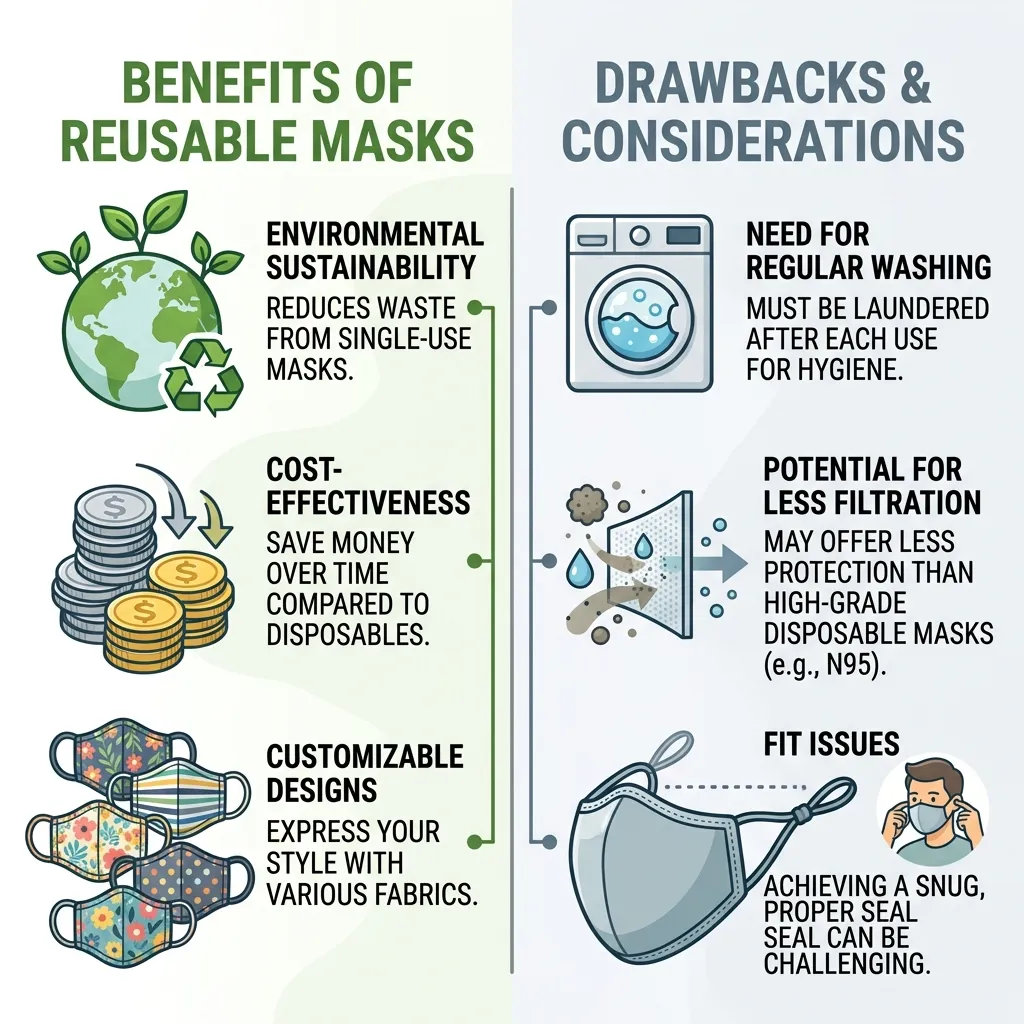
Reusable face masks, usually made from cloth, are designed to be worn, washed, and worn again. They’ve become a staple for many people who want a sustainable, budget-friendly option.
The benefits of reusable masks include:
- Lower long-term cost: Buy a few quality masks once, and you’re set for months.
- Less waste: A single reusable mask can replace hundreds of disposables.
- Comfort and style: Cloth masks come in different fabrics, fits, and designs.
- Adjustability: Many feature nose wires and ear loops you can tweak for a snug fit.
The drawbacks of reusable masks include:
- Variable filtration: Protection depends heavily on the fabric and number of layers.
- Maintenance: They need regular washing to stay hygienic and effective.
- Wear and tear: Fabric loosens over time, which can reduce how well the mask fits.
A well-made cloth mask with multiple tightly woven layers can offer decent protection. A thin, single-layer one? Not so much.
How effective are disposable face masks compared to reusable ones?
Disposable masks—including surgical masks and N95 respirators—are made to be used once and thrown away. They’re built from non-woven synthetic materials designed to filter particles.
Surgical masks are tested to specific medical standards, which makes their filtration more predictable than the average cloth mask. N95 respirators go even further, filtering at least 95% of airborne particles when properly fitted, according to the U.S. Centers for Disease Control and Prevention (CDC).
In short, disposable masks generally outperform cloth masks on filtration. But they create more waste and cost more over time if you wear one every day. There’s a clear trade-off between convenience and consistency on one side, and sustainability and savings on the other.
What’s the difference between a cloth mask and a surgical mask?
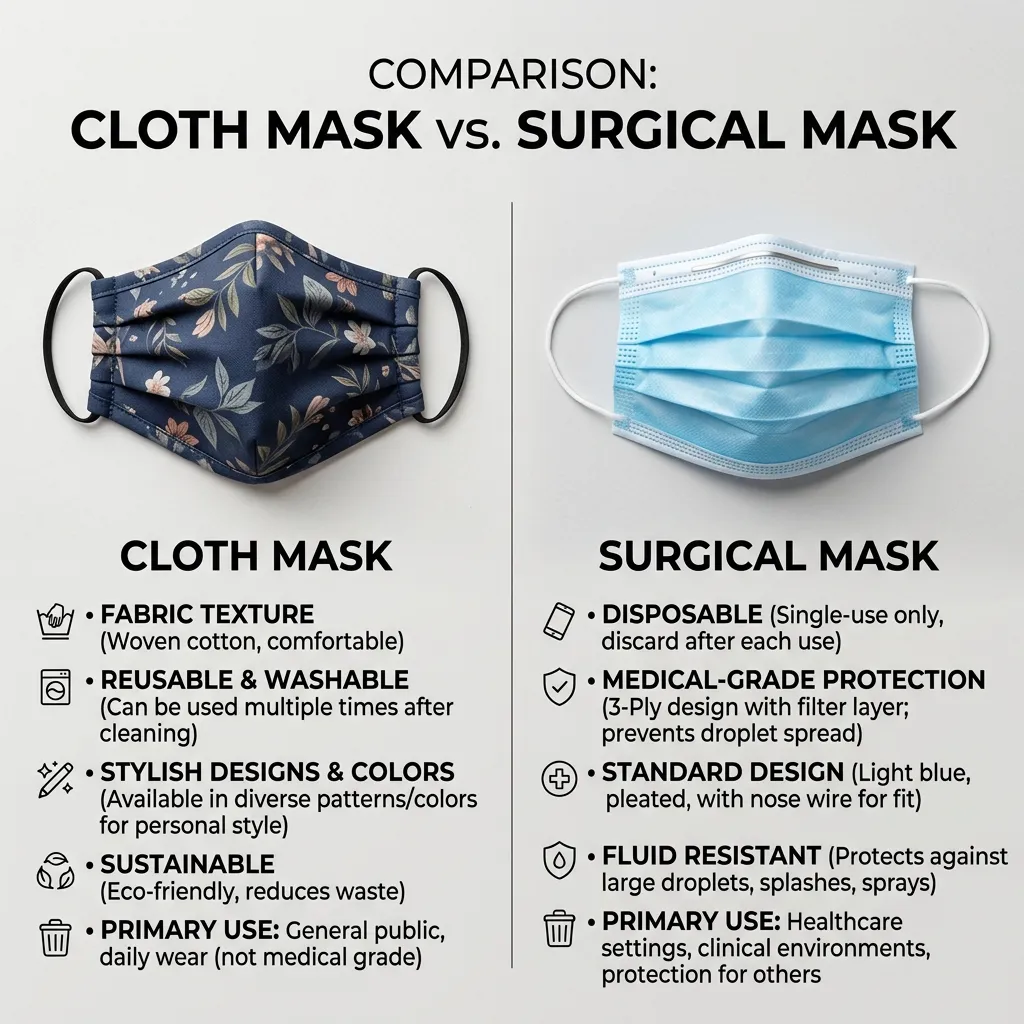
The two masks differ in materials, filtration, and intended use. Here’s how they stack up.
Materials and construction
Cloth masks are made from woven fabrics like cotton, often in two or three layers. Surgical masks use non-woven synthetic fibers, typically in three layers, including a melt-blown filter layer that traps small particles.
Filtration ability
Surgical masks are designed and tested to block a defined percentage of particles and fluids. Cloth masks vary widely. A tightly woven, multi-layer cloth mask performs far better than a loose, single-layer one.
Fit and comfort
Cloth masks often fit more snugly and feel softer against the skin, which makes them comfortable for long wear. Surgical masks can gap at the sides, letting unfiltered air sneak in—though knotting the ear loops and tucking the sides can improve the seal.
Best use cases
Surgical masks shine in clinical or higher-risk environments. Cloth masks work well for everyday, lower-risk situations like grocery shopping or commuting.
What types of filtration efficiency should you know about?
Filtration efficiency measures how well a mask blocks particles. It’s one of the most important factors when comparing masks. Here are the main categories:
- N95 respirators: Filter at least 95% of airborne particles, including very small ones. They offer the highest everyday protection when fitted correctly.
- Surgical masks: Provide solid filtration of larger droplets and many smaller particles, tested to medical standards.
- Multi-layer cloth masks: Filtration varies, but high-quality versions with a filter pocket can perform respectably.
- Single-layer cloth masks: Offer the least protection and are best avoided for virus prevention.
Fit matters as much as filtration. Even an N95 loses effectiveness if air leaks around the edges, so a snug seal is essential no matter which mask you choose.
Which mask is better for virus protection?
For maximum protection against viruses, N95 and surgical masks lead the pack. Their tested, consistent filtration makes them the go-to choice in healthcare settings and during periods of high transmission.
That said, a high-quality, multi-layer cloth mask still provides meaningful protection for everyday situations. It also encourages consistent use because it’s comfortable and reusable—and a mask you’ll actually keep on beats a high-filtration mask you abandon halfway through the day.
Here’s a simple way to decide:
- Choose N95 or surgical masks if you’re in a crowded indoor space, caring for someone sick, or in a high-risk environment.
- Choose a quality cloth mask if you’re running errands, commuting, or spending time in lower-risk outdoor settings.
Layering can help too. Wearing a cloth mask over a surgical mask can improve both fit and filtration.
What’s the best face mask for daily use?
The best mask for daily use balances protection, comfort, and practicality. For most people in lower-risk settings, a well-constructed, multi-layer cloth mask hits the sweet spot.
Look for these features in a daily-wear mask:
- At least two or three layers of tightly woven fabric.
- A filter pocket so you can add a disposable filter for extra protection.
- An adjustable nose wire to seal gaps and prevent glasses from fogging.
- Comfortable, adjustable ear loops or head straps for a secure fit.
- Breathable fabric that won’t leave you gasping after an hour.
If you’re frequently in high-risk environments, disposable N95s or surgical masks remain the smarter pick. Many people keep both on hand—cloth for everyday outings, disposables for crowded or risky situations.
How do reusable and disposable masks compare on cost?
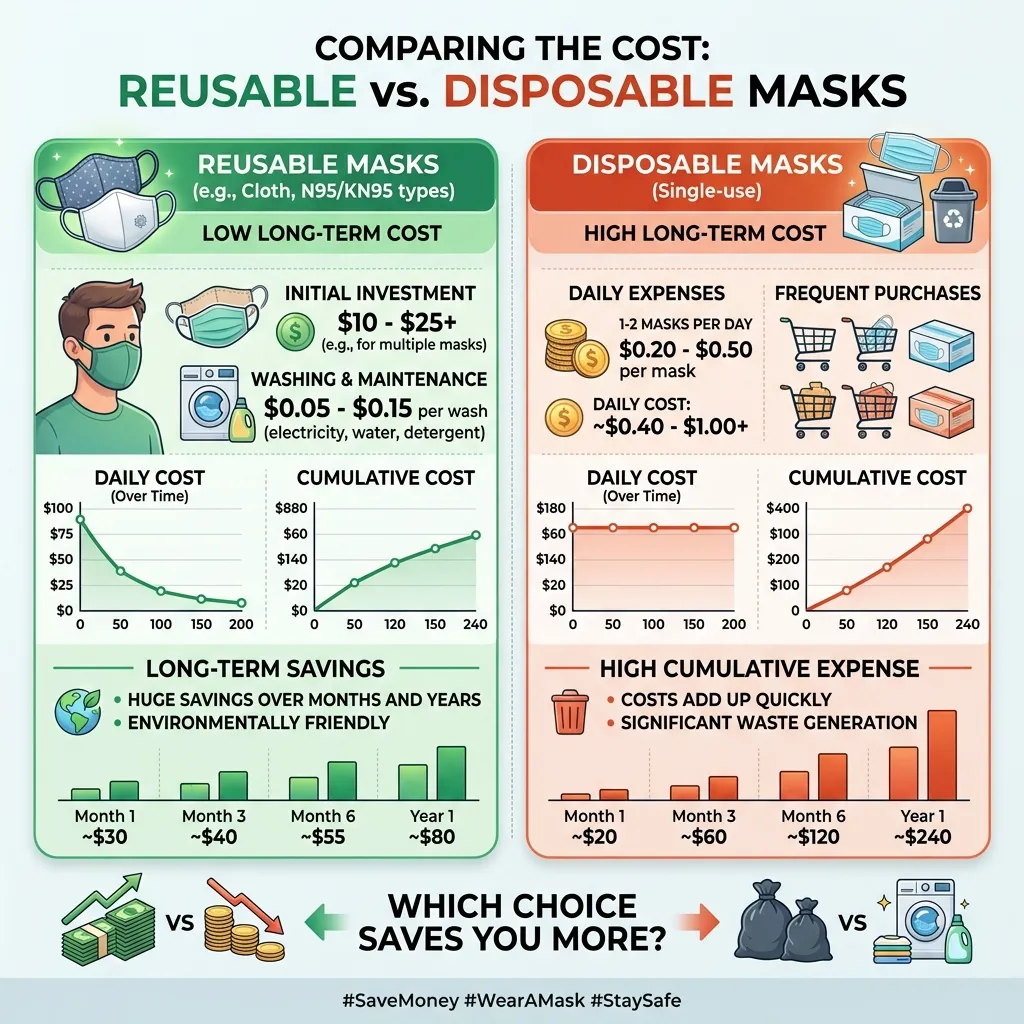
Cost is where reusable masks pull clearly ahead. Let’s look at the numbers.
A disposable mask might cost a small amount per unit, but daily use adds up fast. Wearing one disposable mask each day means buying roughly 365 masks a year. Even at a low price per mask, the annual total climbs quickly.
A reusable cloth mask costs more upfront. But because you can wash and reuse it dozens of times, the cost per use drops dramatically. Owning a small rotation of reusable masks usually costs far less over a year than a steady stream of disposables.
The bottom line on cost:
- Disposables: Low cost per mask, high cumulative cost over time.
- Reusables: Higher upfront cost, much lower cost per use long-term.
For budget-conscious users who wear masks regularly, reusables are the clear financial winner.
What are the most eco-friendly and sustainable mask options?
Disposable masks contribute significantly to waste. Made largely from plastic-based materials, they don’t break down easily and have become a visible part of environmental litter worldwide.
Reusable masks offer a far more sustainable path. A single reusable mask can replace hundreds of disposables, slashing the waste a person generates.
To make your mask routine more eco-friendly:
- Choose reusable masks made from natural or recycled materials.
- Wash them properly to extend their lifespan.
- Dispose of single-use masks responsibly when you do use them.
- Opt for biodegradable filters where available.
If sustainability ranks high on your list, a durable, well-made reusable mask is the standout choice.
Reusable vs disposable: making your final decision
There’s no single mask that’s perfect for everyone. The right choice comes down to what matters most to you.
Pick reusable cloth masks if you want to save money, reduce waste, and stay comfortable during everyday, lower-risk activities. Pick disposable surgical or N95 masks if filtration is your top priority, especially in crowded or high-risk settings.
For many people, the smartest strategy is a mix of both. Keep quality cloth masks for daily errands and a supply of disposables for situations that demand maximum protection. That way, you’re covered no matter where the day takes you.
Whichever you choose, the most important factor is consistency. The best mask is the one you’ll wear correctly and regularly—fitting snugly over your nose and mouth every time.
Frequently asked questions
Are reusable masks as effective as disposable masks?
It depends on the materials. High-quality, multi-layer cloth masks can offer solid protection for everyday use, but disposable surgical masks and N95 respirators generally provide more consistent, tested filtration—making them better for high-risk settings.
How often should I wash a reusable face mask?
Wash your reusable mask after each day of use, or sooner if it becomes damp or dirty. Regular washing keeps it hygienic and helps maintain its effectiveness over time.
Are reusable masks cheaper than disposable masks?
Yes. While reusable masks cost more upfront, you can wash and reuse them many times. Over a year of regular use, reusables typically cost far less than buying a fresh disposable mask every day.
Which mask is best for protecting against viruses?
N95 respirators offer the highest level of everyday protection, followed by surgical masks. For lower-risk situations, a well-made multi-layer cloth mask provides meaningful protection while being reusable and comfortable.
Can I layer a cloth mask over a disposable mask?
Yes. Wearing a cloth mask over a surgical mask can improve both fit and filtration. The combination helps close gaps and adds an extra layer of protection.
