


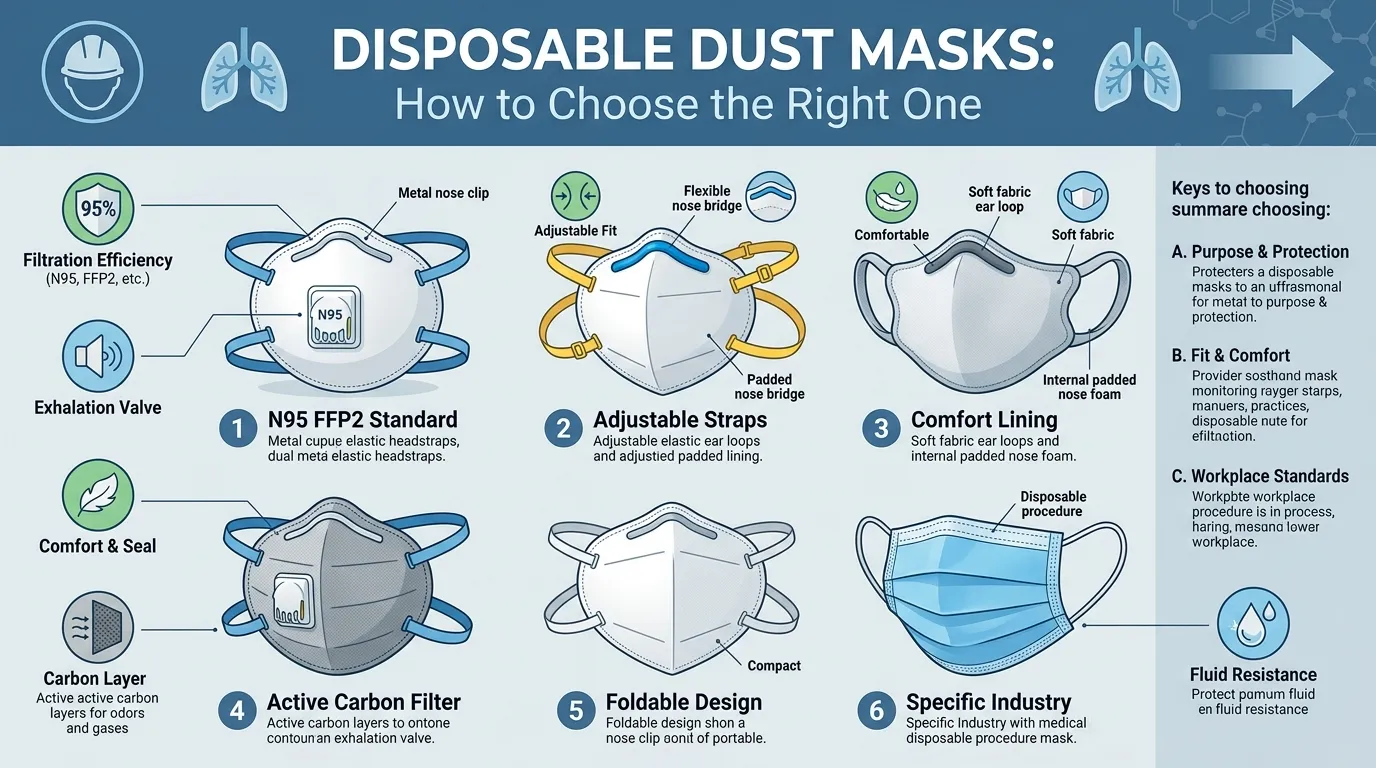
Disposable dust masks are single-use face coverings designed to protect against airborne particles such as sawdust, drywall dust, pollen, and silica. Choosing the right mask—whether a basic dust mask or a certified N95 particulate respirator—helps reduce exposure to harmful dust while improving comfort and safety. By selecting the proper fit and replacing masks when needed, you can protect your lungs during construction, woodworking, DIY, and industrial tasks.
Disposable dust masks are single-use respirators designed to filter out airborne particles like sawdust, drywall dust, and pollen. For most construction and woodworking tasks, an N95-rated particulate respirator offers reliable protection. Choose your mask based on the particle size you’re dealing with, the fit, and whether you need a valve for easier breathing.
Sawdust clouds in the workshop. Fine drywall powder hanging in the air. Silica from cutting concrete. If you work with your hands, you breathe in particles that can damage your lungs over time. A good disposable dust mask is one of the cheapest, easiest ways to protect yourself—yet many people grab the wrong one or wear it incorrectly.
This guide breaks down everything you need to know about disposable dust masks. You’ll learn the different types available, how to match a mask to your task, what the ratings actually mean, and how to wear one so it works the way it should. Whether you’re a weekend DIYer or a full-time tradesperson, the right mask makes a real difference.
Let’s clear the air.
What Are Disposable Dust Masks?
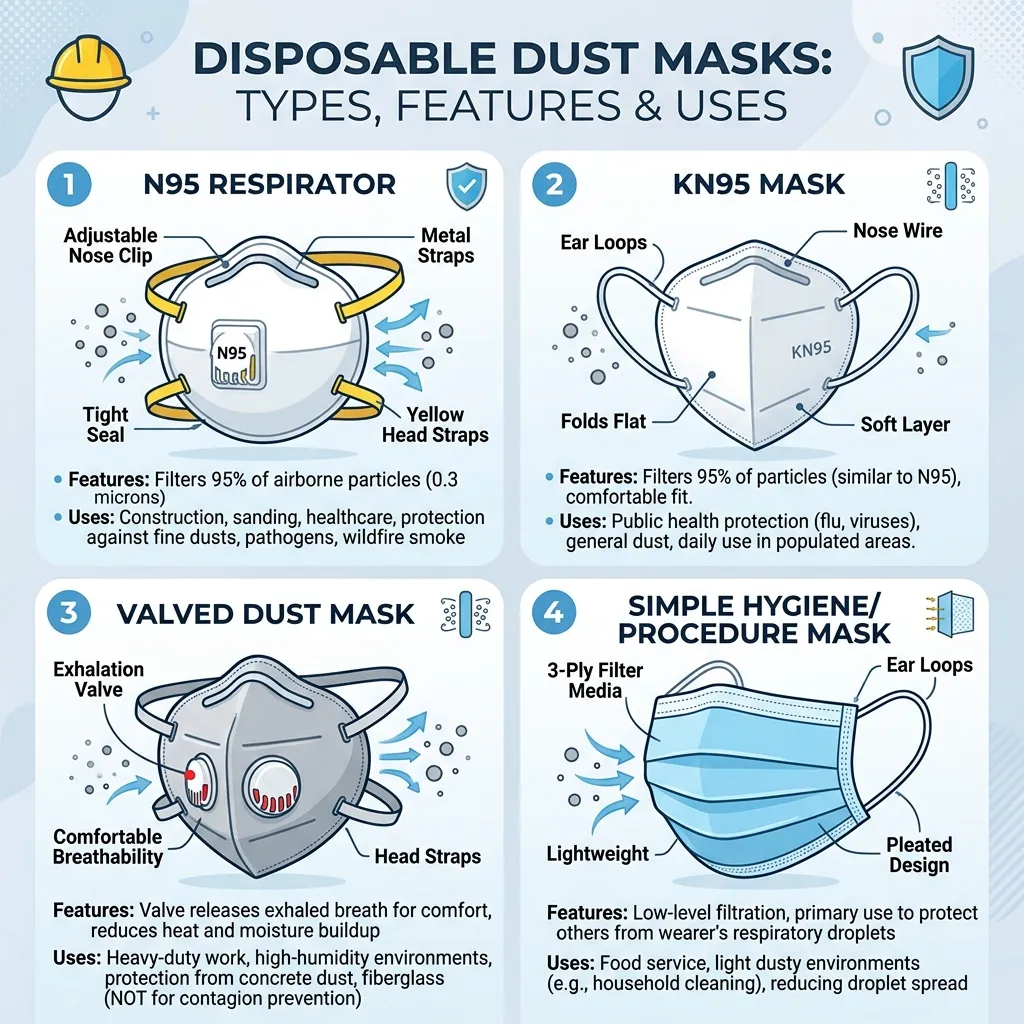
Disposable dust masks are single-use face coverings built to filter dust and other airborne particles out of the air you breathe. Unlike reusable respirators with replaceable cartridges, these masks are thrown away after use—usually at the end of a shift or once they become clogged, damaged, or hard to breathe through.
Most disposable dust masks fall into two broad categories:
- Basic dust masks (nuisance masks): These cover your nose and mouth and offer light protection against non-toxic dust, like the kind you’d kick up while sweeping or sanding light surfaces. They’re not certified respirators.
- Particulate respirator masks: These are tested and rated to filter a specific percentage of airborne particles. An N95 mask, for example, blocks at least 95% of non-oil-based particles.
The difference matters. A nuisance mask might keep large debris out of your throat, but it won’t protect you from fine, hazardous particles. For most serious work, you want a certified particulate respirator.
Why Dust Protection Masks Matter
Breathing in dust isn’t just uncomfortable—it can cause lasting harm. Fine particles slip past your body’s natural defenses and settle deep in your lungs. Over months and years of exposure, this can lead to conditions like silicosis, chronic bronchitis, and other respiratory diseases.
Some of the most common workplace hazards include:
- Silica dust from cutting or grinding concrete, brick, and stone
- Wood dust from sawing, sanding, and routing
- Drywall and plaster dust from renovation work
- Metal particles from grinding and welding prep
- Mold spores and allergens from cleanup and demolition
A dust filtering face mask creates a barrier between these particles and your airways. It’s a small step that pays off across a lifetime of work.
What Are the Different Types of Disposable Dust Masks?
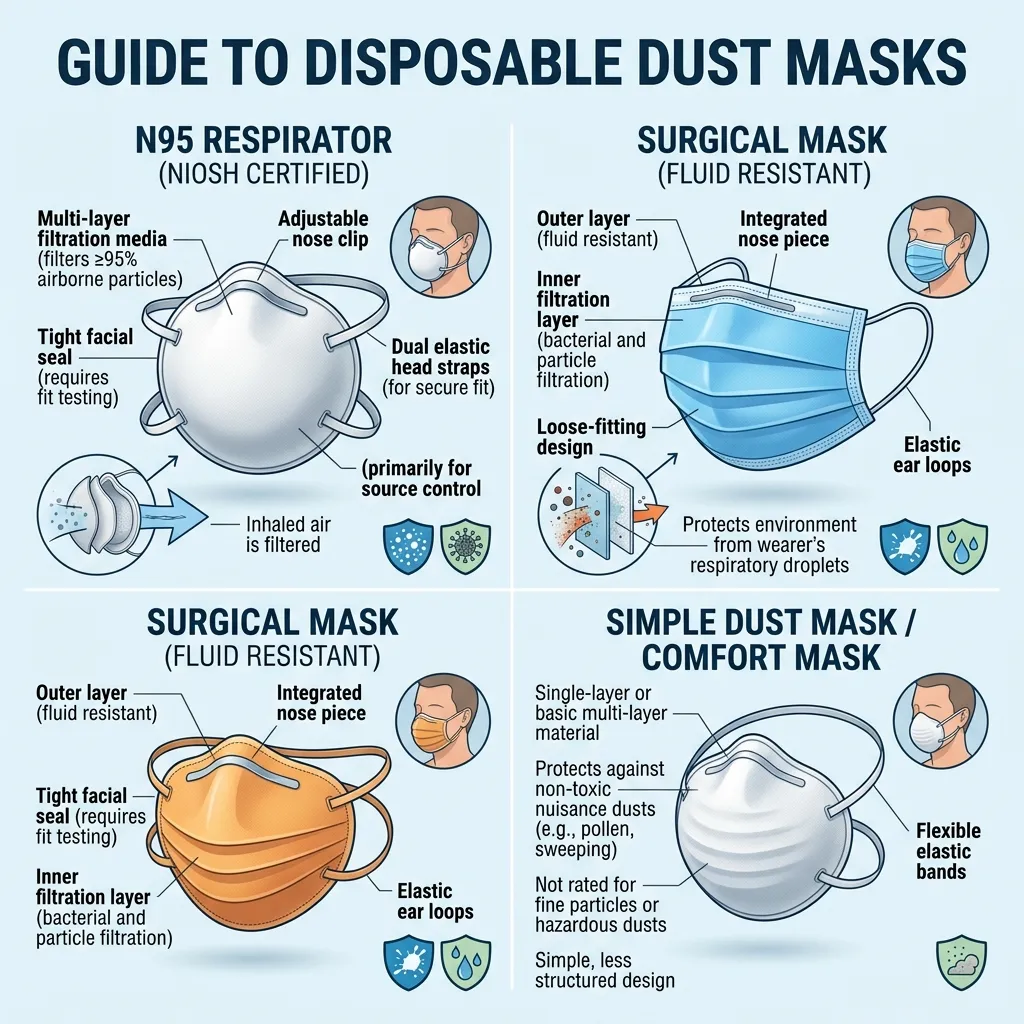
Not all masks are built the same. Choosing the right one starts with understanding the options.
Single-Use Dust Masks for Light Tasks
These lightweight, molded masks are designed for quick jobs and low-hazard environments. Think household cleaning, light sanding, or yard work. They’re inexpensive and comfortable but offer the least protection. If you’re only dealing with large, non-toxic particles, a basic single-use dust mask will do the job.
Particulate Respirator Masks for Serious Protection
When the dust gets fine and potentially harmful, you need a certified particulate respirator. These masks are tested against strict standards and labeled with a rating (like N95 or N99) that tells you how much they filter. They form a tight seal around your nose and mouth, which is what makes them effective.
Construction Dust Masks
Construction sites throw a lot at your lungs—silica, cement dust, insulation fibers, and more. Construction dust masks are typically N95-rated or higher and built to handle heavy-duty environments. Many include a sturdy nose clip and adjustable straps to keep the seal tight during physical work.
Woodworking Dust Masks
Wood dust is deceptively dangerous. Fine particles from hardwoods, MDF, and treated lumber can irritate your lungs and, with long-term exposure, raise the risk of serious illness. Woodworking dust masks often feature an exhalation valve, which makes breathing easier during long stretches at the bench or saw.
Industrial Dust Masks
In factories, warehouses, and manufacturing settings, workers may face a steady stream of airborne contaminants. Industrial dust masks are rated for these demanding conditions and are often used as part of a broader safety program. They prioritize durability, filtration efficiency, and all-day comfort.
What Do the Mask Ratings Mean?
The letters and numbers on a particulate respirator aren’t random—they tell you exactly what the mask can do.
In the United States, the National Institute for Occupational Safety and Health (NIOSH) certifies respirators using a letter-number system:
- N (Not oil-resistant): N95, N99, and N100 masks filter non-oil-based particles. N95 filters at least 95%, N99 at least 99%, and N100 at least 99.97%.
- R (Oil-resistant): R95 masks resist oil-based aerosols for a limited time.
- P (Oil-proof): P95 and P100 masks offer strong, longer-lasting protection against oil-based particles.
For most dust-related tasks—woodworking, drywall, general construction—an N95 mask is the standard choice. If your work involves oil-based mists or aerosols, look for an R- or P-rated mask instead.
How Do You Choose the Right Disposable Dust Mask?
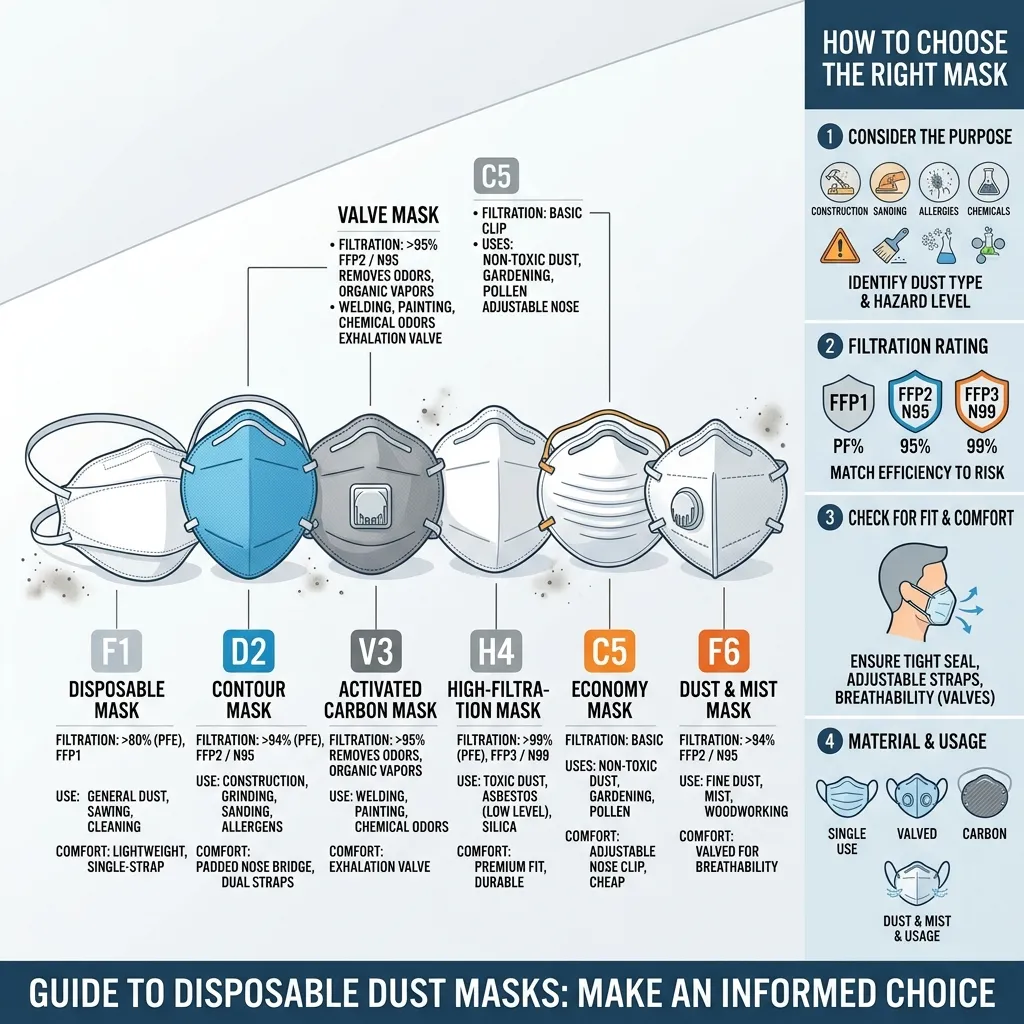
Picking the right mask comes down to a few key questions.
Choose based on the hazard. Identify what you’re breathing in. Non-toxic nuisance dust calls for a basic mask, while fine or hazardous particles demand a certified N95 or higher.
Choose based on fit. A mask only works if it seals against your face. Facial hair, the wrong size, or a poor nose clip can break the seal and let particles leak in. Try different styles to find one that fits snugly without gaps.
Choose based on comfort. If a mask is uncomfortable, you’ll be tempted to take it off—which defeats the purpose. For long jobs, a mask with an exhalation valve and soft padding can make a big difference.
Choose based on the environment. Hot, humid, or high-exertion work benefits from masks with valves that release heat and moisture. Cleaner, low-dust environments may only need a simple single-use option.
Here’s a quick way to match the task to the mask:
- Light cleaning or sweeping: Basic single-use dust mask
- Sanding and light woodworking: N95 woodworking dust mask
- Drywall, plaster, and renovation: N95 construction dust mask
- Concrete cutting and silica exposure: N95 or N100 particulate respirator
- Factory and manufacturing work: Industrial-rated N95 or P100
How Do You Wear a Disposable Dust Mask Correctly?
Even the best mask fails if you wear it wrong. Follow these steps for a proper fit:
- Wash your hands before handling the mask to keep it clean.
- Position the mask over your nose and mouth, with the nose clip at the top.
- Secure the straps—one above your ears and one below, or around the back of your head, depending on the design.
- Mold the nose clip to the shape of your nose using both hands for a snug seal.
- Check the seal by breathing in and out. If air leaks around the edges, adjust the straps and nose clip until it fits tightly.
A quick seal check takes seconds and makes all the difference. If you can feel air escaping around your nose or cheeks, the mask isn’t protecting you fully.
When Should You Replace a Disposable Dust Mask?
Because these are non-medical, single-use masks, you shouldn’t expect them to last. Replace your disposable safety mask when:
- It becomes hard to breathe through (the filter is clogged)
- The straps stretch out or the nose clip loosens
- It gets damp, dirty, or visibly damaged
- You’ve finished a job and the mask is used up
Reusing a clogged or damaged mask reduces protection and can trap contaminants close to your face. When in doubt, swap it out—they’re inexpensive enough to replace often.
Are Disposable Dust Masks the Same as Medical Masks?
No. Non-medical dust masks are designed to protect the wearer from inhaling particles, while medical masks are primarily designed to protect others from the wearer’s respiratory droplets. Some N95 respirators are certified for both uses, but standard dust masks sold for construction and woodworking are not medical devices. If you need protection in a healthcare setting, look for masks specifically certified for that purpose.
Breathe Easier on Your Next Job
A disposable dust mask is one of the simplest investments you can make in your long-term health. The key is matching the mask to the task—a basic single-use mask for light cleanup, an N95 particulate respirator for construction and woodworking, and a higher-rated option for silica or industrial exposure.
Before your next project, take a moment to identify what you’ll be breathing in, pick a mask rated for the job, and make sure it fits snugly. Keep a stock of fresh masks on hand so you’re never tempted to reuse a worn-out one. Your lungs will thank you decades from now.
Frequently Asked Questions
What is the best disposable dust mask for woodworking?
For most woodworking tasks, an N95-rated particulate respirator is the best choice. It filters at least 95% of fine wood dust particles. Look for a model with an exhalation valve to make breathing easier during long sessions at the saw or sanding bench.
Can you reuse a disposable dust mask?
Disposable dust masks are designed for single use. While you might wear one across a single short task, you should replace it once it becomes clogged, damp, dirty, or damaged. Reusing a worn mask reduces filtration and can trap particles near your face.
Do disposable dust masks protect against silica?
A properly fitted N95 or higher-rated particulate respirator can protect against airborne silica dust. Basic nuisance masks do not. Because silica exposure carries serious long-term health risks, always use a certified respirator and ensure a tight seal when cutting or grinding concrete, brick, or stone.
What’s the difference between an N95 and a basic dust mask?
An N95 is a certified particulate respirator that filters at least 95% of non-oil-based airborne particles and forms a tight seal around the face. A basic dust mask, sometimes called a nuisance mask, only blocks large particles and isn’t tested or rated for fine, hazardous dust.
How long does a disposable dust mask last?
There’s no fixed lifespan—it depends on the dust level and how hard you’re working. Replace your mask when it becomes difficult to breathe through, when the straps or nose clip loosen, or when it gets damp or dirty. In heavy-dust environments, you may need a new mask several times a day.
What are disposable dust masks used for?
Disposable dust masks are used to protect the wearer from inhaling airborne particles such as wood dust, drywall dust, pollen, and other non-oil-based contaminants.
Are disposable dust masks reusable?
No. Disposable dust masks are designed for single use and should be replaced when they become dirty, damaged, damp, or difficult to breathe through.
What is the difference between a disposable dust mask and an N95 respirator?
A basic disposable dust mask offers protection against larger particles, while an N95 respirator is certified to filter at least 95% of non-oil airborne particles and provides a tighter facial seal.
Can disposable dust masks protect against silica dust?
Only certified particulate respirators such as N95 or N100 masks provide effective protection against silica dust. Basic dust masks are not suitable for silica exposure.
When should I replace a disposable dust mask?
Replace disposable dust masks whenever they become clogged, wet, damaged, lose their fit, or after completing a dusty work shift.
Are disposable dust masks suitable for woodworking?
Yes. N95-rated disposable dust masks are highly recommended for woodworking because they filter fine wood dust generated during cutting and sanding.
Do disposable dust masks protect against chemicals or fumes?
No. Standard disposable dust masks are designed for airborne particles only and do not protect against gases, vapors, or chemical fumes.
How do I choose the right disposable dust mask?
Select disposable dust masks based on the type of dust, required filtration level, proper fit, comfort, and whether you need features like an exhalation valve.
Can I wear disposable dust masks with glasses?
Yes. Properly fitted disposable dust masks help reduce air leakage, which can also minimize fogging on safety glasses or prescription eyewear.
Why is proper fit important for disposable dust masks?
A proper seal ensures disposable dust masks filter contaminated air effectively. Gaps around the nose or cheeks allow dust particles to bypass the filter and reduce protection.
