


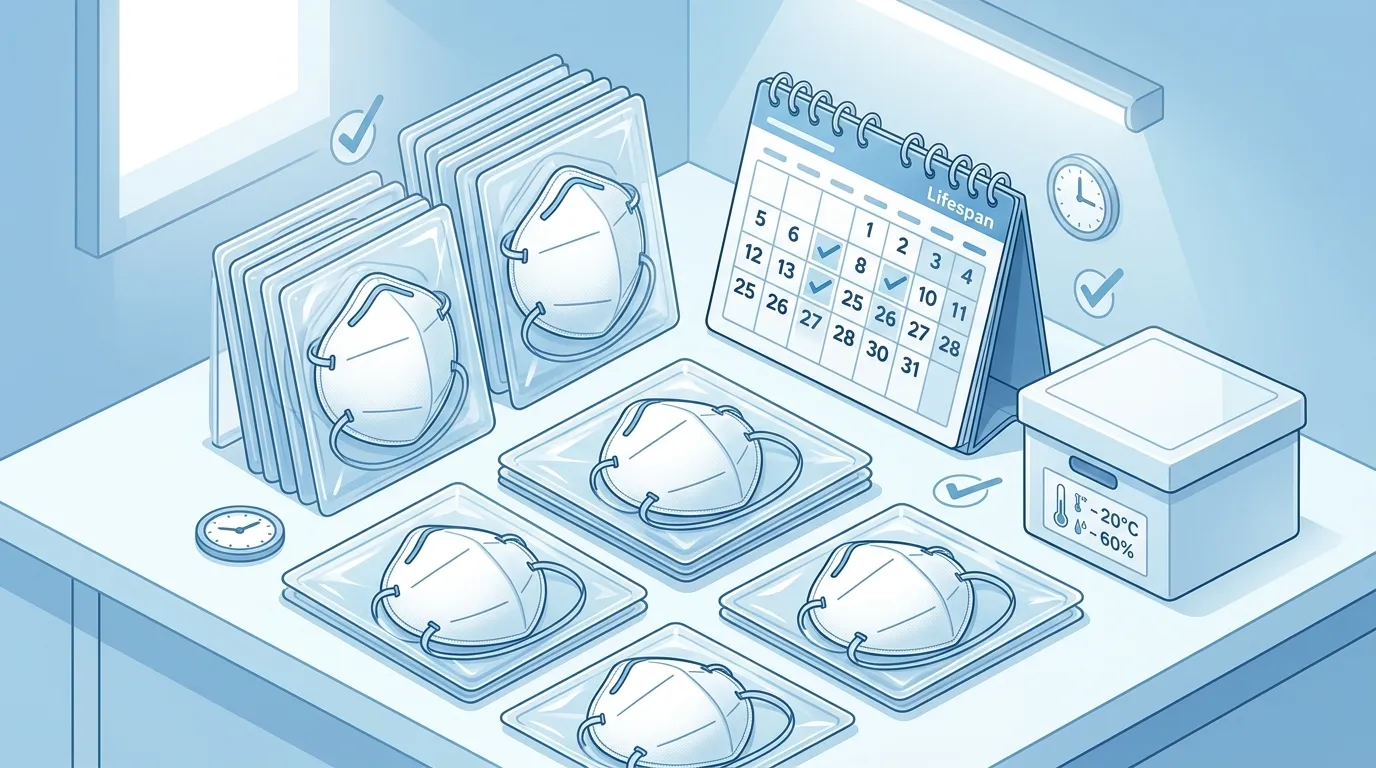
Yes, N95 masks do expire, typically after about five years from their manufacture date. Over time, critical components such as elastic straps, nose foam, and filter materials can degrade, reducing the mask’s fit and effectiveness. Understanding do N95 masks expire, how to check expiration dates, and proper storage practices can help ensure you receive the highest level of protection when using an N95 respirator.
Yes, N95 masks do expire. Most manufacturers assign a shelf life of about 5 years from the date of manufacture. Over time, components like elastic straps and nose foam can degrade, affecting the mask’s fit and filtration performance. While an expired N95 may still provide some protection, it may not meet its original safety standards.
If you’ve found an old N95 mask tucked away in a drawer, you may wonder if it’s still safe to use. The answer depends on its age, condition, and storage history. Although N95 masks are designed to last for years, they don’t remain effective indefinitely.
This guide explains N95 mask expiration dates, shelf life, storage recommendations, and how to determine whether a mask is still safe to wear.
What Is the N95 Mask Expiration Date?
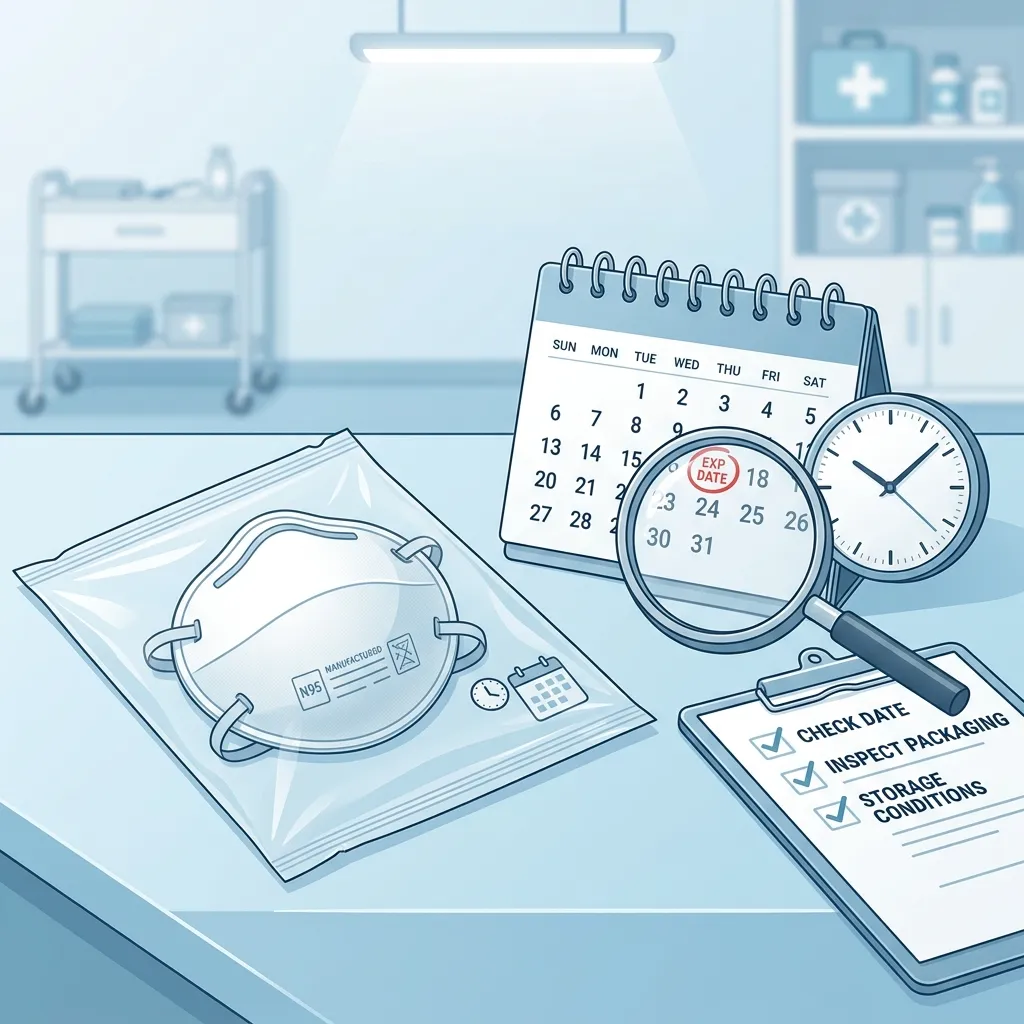
Every N95 respirator comes with a manufacturer-assigned expiration date, usually printed on the box or the individual packaging. This date reflects how long the manufacturer guarantees the mask will perform as designed.
Most N95 masks carry a shelf life of around 5 years from the date of manufacture, though this varies by brand and model. Some masks list the expiration date directly, while others show only the manufacture date. If you see a manufacture date but no expiry, you can usually estimate the expiration by adding five years—but always check the manufacturer’s guidance to be sure.
The expiration date exists because the mask is made up of several materials that don’t age at the same rate. The filter media, straps, metal nose clip, and foam cushioning all have their own lifespans. Once any of these components weakens, the mask may no longer seal properly or filter as effectively.
How Long Do N95 Masks Last?
In a sealed package and under ideal conditions, a typical N95 mask lasts about 5 years. That’s the window during which the manufacturer can vouch for its filtration efficiency and fit.
Several factors influence this timeline:
- Storage conditions: Heat, humidity, and sunlight speed up material breakdown.
- Packaging: Masks kept in their original sealed packaging last longer than loose ones.
- Handling: Frequent handling or compression can damage the mask before its expiration date.
- Brand and model: Different manufacturers use slightly different materials and adhesives, which affects longevity.
It’s worth noting that the 5-year figure assumes the mask has been stored correctly the entire time. A mask left in a hot car or a damp bathroom may degrade much faster, even if the printed date says it’s still good.
Can You Use an Expired N95 Mask?
This is the question most people care about, and the honest answer is: it depends.
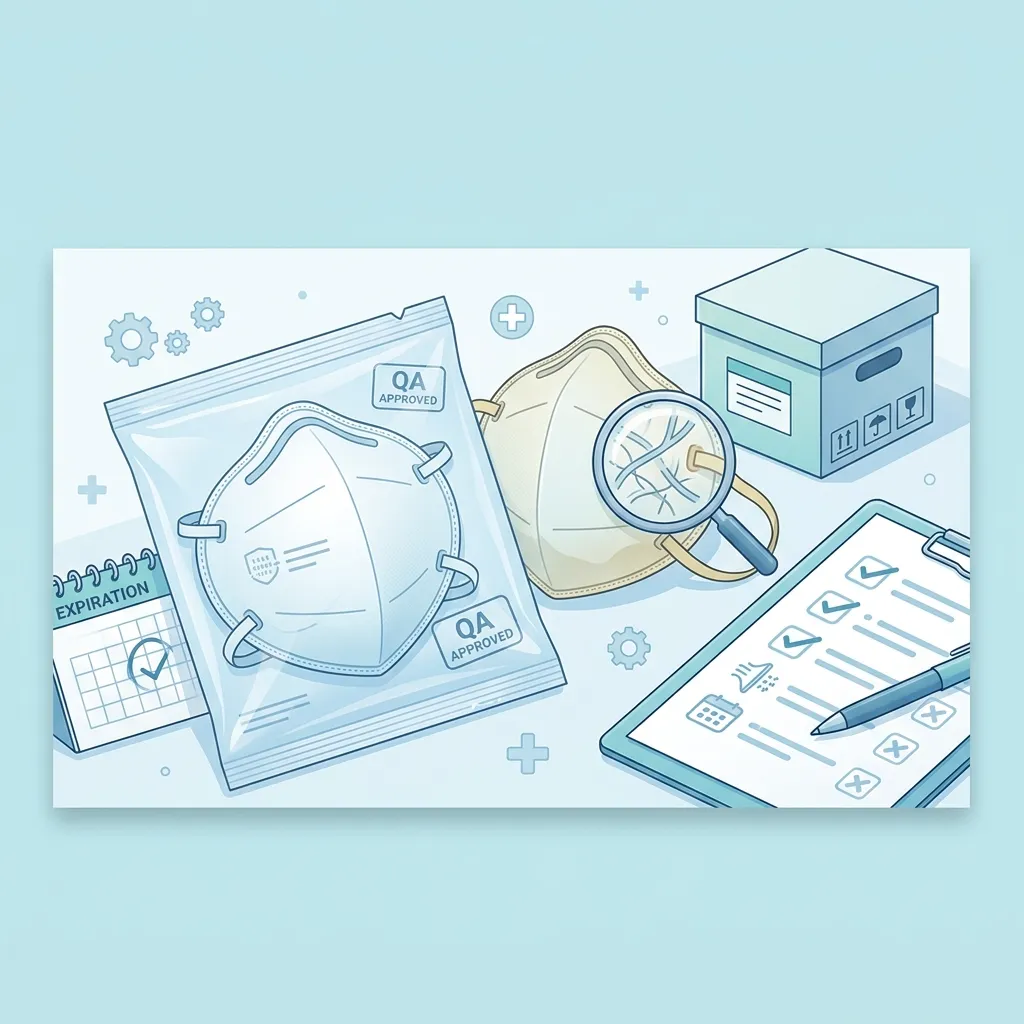
During the COVID-19 pandemic, the U.S. Centers for Disease Control and Prevention (CDC) and the National Institute for Occupational Safety and Health (NIOSH) acknowledged that, in times of shortage, expired N95 masks could be used as a last resort. Research suggested that many stockpiled N95s retained much of their filtration performance years past their printed expiration dates—as long as the mask still fit well and showed no visible damage.
That said, this guidance came with caveats. The main concern with an expired mask isn’t usually the filter material itself, which tends to hold up reasonably well. The bigger issue is the physical components: the elastic straps can lose their stretch, the foam can crumble, and the nose clip can weaken. If the mask can’t form a tight seal against your face, unfiltered air leaks in around the edges—and that defeats the purpose.
So here’s a practical way to think about it:
- Choose a non-expired mask whenever you have one available. It’s the only way to be confident you’re getting full protection.
- An expired mask is better than no mask in a pinch, provided it still fits snugly and passes a quick inspection.
- Avoid expired masks for high-risk situations, such as caring for someone who is sick or working in a hazardous environment, where reliable filtration is critical.
Is It Safe to Use an Expired N95 Mask?
An expired N95 can still provide protection, but it may not deliver the full filtration efficiency it had when new. Studies on stockpiled respirators have generally found that filtration performance degrades slowly, while fit and strap integrity tend to fail first.
The safety of an expired mask really comes down to two things: how it was stored and what condition it’s in now. A mask stored in a cool, dry place in its original packaging is far more likely to perform well than one tossed loose in a glovebox.
Before using any expired N95, perform a quick check:
- Inspect the straps—do they still stretch and snap back?
- Press the nose clip—does it hold its shape?
- Look at the foam and filter material for cracks, discoloration, or crumbling.
- Put it on and do a seal check—cup your hands over the mask and exhale. If air leaks around the edges, the seal is compromised.
If the mask passes all four checks, it’s likely still functional for everyday, low-risk use. If it fails any of them, replace it.
How Does N95 Mask Effectiveness Change After Expiration?
N95 masks are designed to filter out at least 95% of airborne particles, including very small ones. That filtration capacity is the source of the “95” in the name.
After expiration, two things can happen to that effectiveness:
- Gradual filter decline: The electrostatic charge that helps the filter trap tiny particles can fade over many years, slightly reducing efficiency. This decline is usually slow and modest within the first few years past expiration.
- Fit failure: This is the more significant risk. Even a perfect filter is useless if the mask doesn’t seal to your face. Degraded straps and foam are the most common reasons an expired mask underperforms.
In other words, a mask might still filter 95% of particles in a lab test, but if it leaks around your nose and cheeks in real life, your actual protection drops dramatically. That’s why fit matters just as much as filtration.
What Are the Signs an N95 Mask Should Be Replaced?
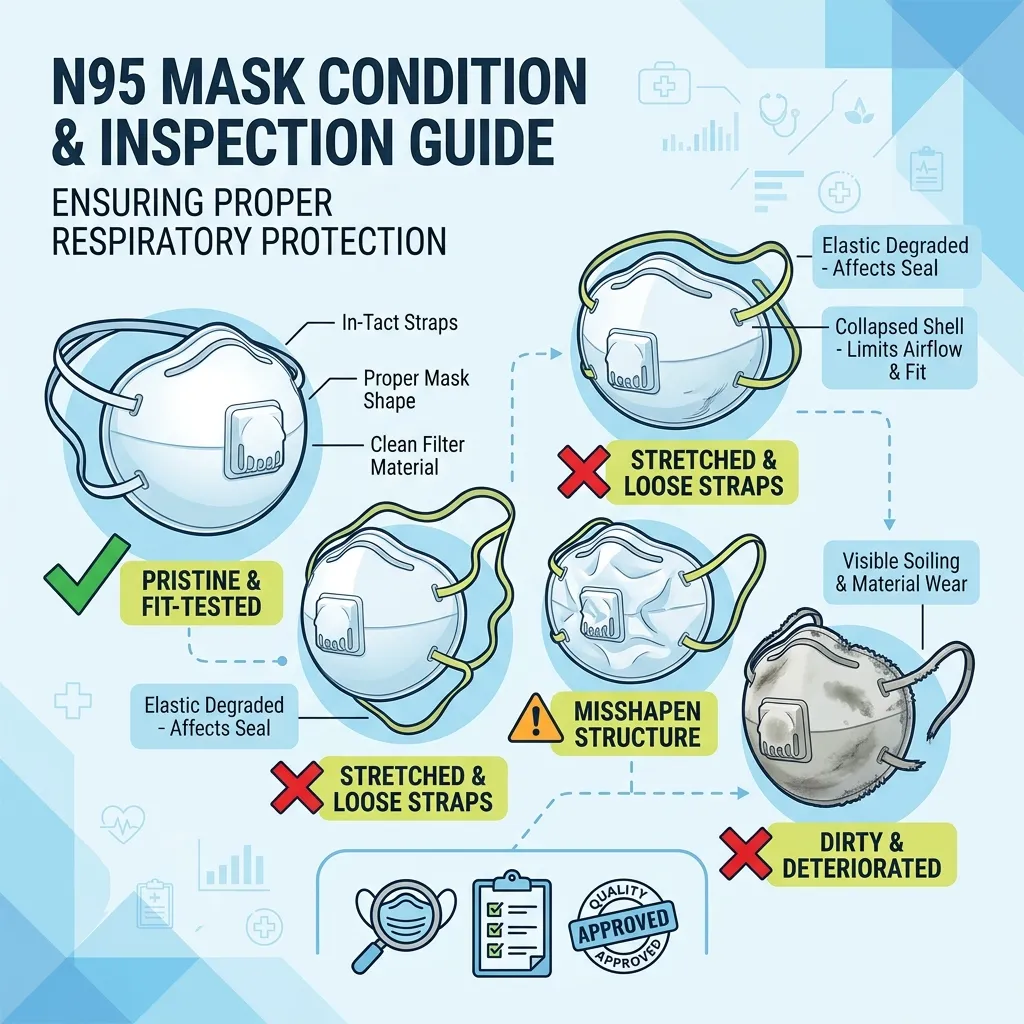
Whether your mask is expired or not, certain warning signs mean it’s time for a new one. Replace your N95 if you notice any of the following:
- Stretched or brittle straps that no longer hold the mask firmly in place.
- A damaged or bent nose clip that won’t conform to your nose.
- Crumbling, discolored, or hardened foam around the nose area.
- Visible holes, tears, or thin spots in the filter material.
- Soiling, moisture, or odor—a mask that’s dirty or damp won’t filter well.
- A poor seal during a fit check, with air escaping around the edges.
- Difficulty breathing through it, which can indicate the filter is clogged.
When in doubt, swap it out. N95 masks are designed for limited use, and a compromised mask gives a false sense of security.
How Do You Store N95 Masks Properly?
Good storage is the single biggest factor in extending the life of your N95 masks. Proper conditions slow down material breakdown and help your masks stay closer to their original performance through their full shelf life.
Follow these storage guidelines:
- Keep them in their original packaging until you’re ready to use them. The sealed packaging protects against dust, moisture, and light.
- Store in a cool, dry place. A temperature-controlled closet or drawer is ideal. Avoid garages, cars, and attics where temperatures swing.
- Keep them away from direct sunlight. UV light degrades the elastic and other materials over time.
- Avoid humid areas like bathrooms, since moisture can damage the filter and foam.
- Don’t crush or compress them. Storing masks under heavy objects can deform the shape and damage the seal.
- Keep them clean. Handle masks with clean hands and store them away from chemicals, dust, and contaminants.
If you’ve already opened a mask but want to reuse it for low-risk situations, store it in a breathable paper bag rather than a sealed plastic one. A paper bag lets moisture escape and helps prevent the buildup of bacteria.
N95 Respirator Expiration Guidelines: A Quick Recap
To pull it all together, here are the key takeaways on N95 mask expiration and longevity:
- Most N95 masks have a shelf life of about 5 years from the date of manufacture.
- The expiration date is printed on the box or packaging; if only a manufacture date is shown, add roughly five years.
- Expired masks may still work, especially if stored well, but they aren’t guaranteed to meet original standards.
- Fit failure—not filter failure—is usually the first thing to go on an aging mask.
- Always inspect and seal-check an expired mask before relying on it.
- Proper storage in a cool, dry, dark place dramatically extends mask life.
- For high-risk situations, always reach for a non-expired, undamaged mask.
The Bottom Line on N95 Mask Expiration
N95 masks do expire, and that date is there for good reason. Over time, the straps, foam, and filter materials that make these respirators so effective begin to break down—even if the mask looks fine at a glance. An expired N95 can still offer some protection, particularly if it’s been stored properly and passes a careful inspection, but it shouldn’t be your first choice when reliable filtration really matters.
The smartest move is to check the dates on the masks you already own, store them correctly, and rotate your supply so you’re always reaching for the freshest one. A quick inspection and seal check takes seconds and tells you almost everything you need to know.
If your masks are well past their prime or failing the basic checks, it’s time to restock. Fresh masks are widely available and affordable, and they’re the only way to be confident you’re getting the full 95% protection these respirators are designed to provide.
Frequently Asked Questions
Do N95 masks really expire after 5 years?
Most N95 masks carry a manufacturer shelf life of about 5 years from the date of manufacture. This is the period during which the manufacturer guarantees the mask will perform as designed. After that, the mask isn’t automatically useless, but its performance is no longer guaranteed and should be verified through inspection and a seal check.
Can I use an N95 mask that expired last year?
Likely yes, for low-risk, everyday situations—provided the mask was stored properly and still passes a visual inspection and seal check. Make sure the straps stretch, the nose clip holds its shape, and there are no tears or crumbling foam. For high-risk situations, use a non-expired mask instead.
How can I tell when my N95 mask was made?
Check the original packaging or box, which usually lists either the expiration date or the manufacture date. If only the manufacture date is shown, you can estimate the expiration by adding about five years, though you should confirm with the specific manufacturer’s guidance.
Does an expired N95 still filter 95% of particles?
It might, but it’s not guaranteed. The filter material tends to degrade slowly, so many expired masks retain much of their filtration ability for years. However, the electrostatic charge can weaken over time, and degraded straps or foam can ruin the fit—which lowers your real-world protection regardless of the filter’s lab performance.
What’s the best way to store N95 masks long term?
Keep them in their original sealed packaging in a cool, dry, dark place away from sunlight, humidity, and heat. Avoid garages, cars, and bathrooms. Don’t crush or compress the masks, and handle them with clean hands. Proper storage helps them last through their full shelf life.
Is it better to wear an expired N95 or a cloth mask?
A well-fitting expired N95 that passes inspection generally offers better filtration than a cloth mask, since N95s are designed to filter at least 95% of airborne particles. That said, if the expired N95 has a poor seal or visible damage, a clean, well-fitting alternative may serve you better.
